Parents Guide to E-Bike Scheme – Guarantor Checklist Before Signing
Many students applied for the Punjab E-Bike Scheme Phase 2 with the support of their parents. This is a serious responsibility, and it should not be accepted in a hurry.
Phase 2 applications ran from 5 September to 4 October 2026 and are now closed, with 100,000 bikes offered. By 1 October 2026 the portal had recorded 1,149,058 registrations, including 222,101 female applicants, rising past 1.3 million by the deadline.
What Signing as Guarantor Really Means
A guarantor stands behind the student’s promise to pay.
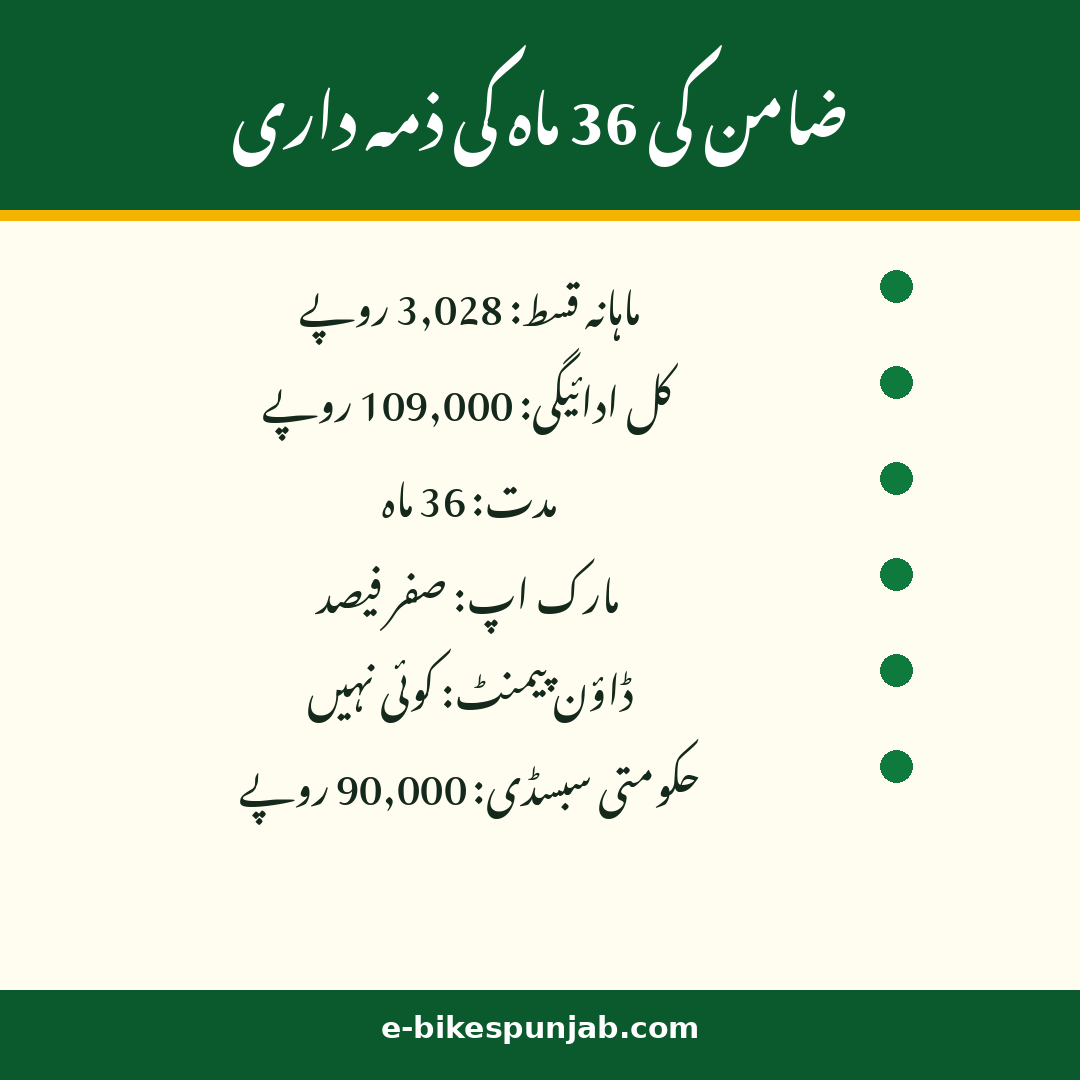
- Full Responsibility: You accept responsibility for the student’s monthly installments for 36 months.
- Long Commitment: This is not a one-time signature; it stays active until the full amount is paid.
- Written Record: Your signature becomes part of the official record with the Bank of Punjab verification process.
- Family Decision: The decision should be taken by the whole family, not by one person alone.
36-Month Cost Parents Must Understand
The financial side is simple, but parents should still go through it slowly.
| Item | Amount |
|---|---|
| Total Price | Rs 199,000 |
| Government Subsidy | Rs 90,000 |
| Student Share | Rs 109,000 |
| Monthly Installment | Rs 3,028 |
| Payment Period | 36 months |
| Markup | 0% |
| Down Payment | None |
- Monthly Amount: Rs 3,028 must be paid every month for 36 months without a break.
- Total Student Share: Rs 109,000 is the total the student pays after the Rs 90,000 subsidy.
- Covered by Government: Insurance, markup, registration, and token tax are covered by the government.
- Budget Check: Multiply Rs 3,028 by 12 to see the yearly cost, and plan for it in advance.
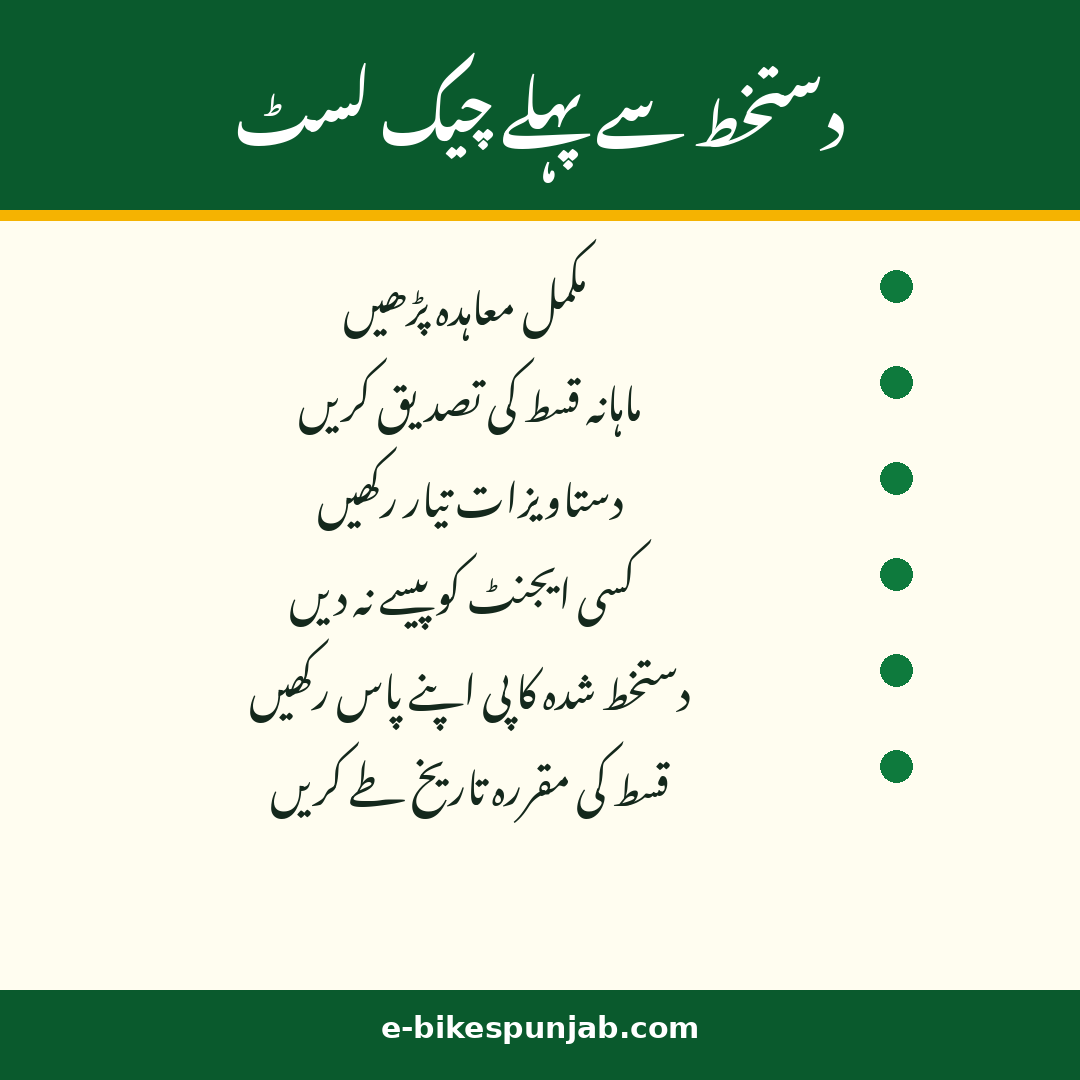
Guarantor Checklist Before Signing
Use this checklist step by step.
- Read the Full Terms: Read the complete agreement, not only the first page or the summary.
- Confirm the Amount: Confirm the monthly installment of Rs 3,028 and the 36-month period in writing.
- Check the Student Details: Check that the student’s name, CNIC details, and institution record match the application.
- Understand the Bike Rule: Remember that only one bike is allowed per family under this scheme.
- Ask About Verification: Ask how the Bank of Punjab verification works and what documents it needs.
- Keep a Copy: Keep a signed copy of every paper for your own record at home.
- Discuss Payment Duty: Agree in the family who will arrange the payment each month and by which date.
- Never Pay Agents: Never pay any agent or middleman for selection, verification, or delivery.
Documents Parents Should Keep Ready
Verification is much easier when documents are ready in advance.
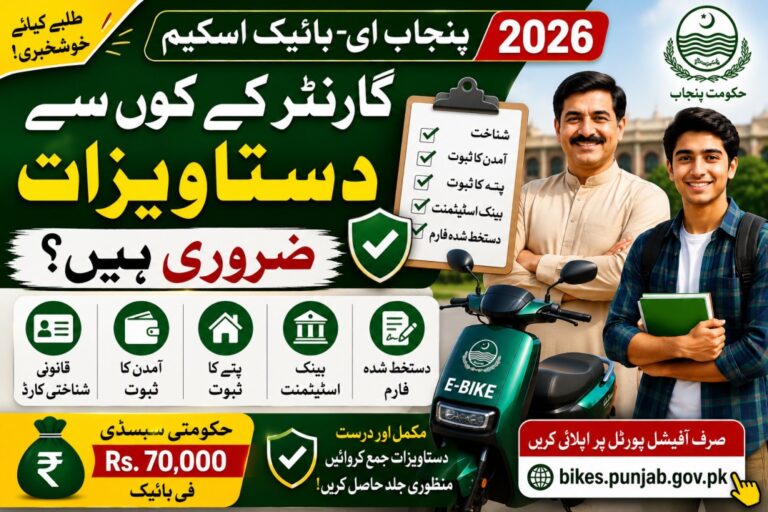
- Student CNIC or B-Form: The student’s identity document as used in the application.
- Guarantor CNIC: The parent or guardian CNIC that will be linked to the guarantee.
- Student Proof: Proof of enrollment at the college or university named in the application.
- Family Record: Family details that confirm the one-bike-per-family rule.
- Contact Details: A working mobile number and address for official messages and calls.
- Bank Record: Any bank details asked for during the Bank of Punjab verification step.
What Happens If an Installment Is Missed
A missed installment does not simply disappear.
- Missed Payment: A missed installment stays due and must still be paid.
- Guarantor Contact: The guarantor may be contacted if the student does not pay on time.
- Early Contact: Contact the bank or office early if a payment problem appears.
- Monthly Routine: A fixed monthly routine is the best protection against missed payments.
Family Discussion Points Before You Agree
A bike is useful for college travel, but it also brings daily responsibility.
- Daily Use: Decide the daily route to college and the safe parking place.
- Charging Plan: Decide where and when the bike battery will be charged at home.
- Helmet Rule: Make helmet use a strict family rule from the very first ride.
- Training Attendance: Make sure the student attends the full two-day training.
- Shared Duty: Agree that bike care and installment payment are shared family duties.
Balloting and Distribution Status Parents Should Check
Balloting has been announced for 4 November 2026, and distribution is reported from 5 November 2026 following the Chief Minister’s announcement of 27-28 October 2026.
- Balloting Date: Balloting has been announced for 4 November 2026; confirm live status on the official portal.
- Distribution Start: Distribution is reported from 5 November 2026; confirm the notice before travelling.
- No District Schedule: No district-wise delivery schedule has been officially released yet.
- Fair Draw: Selection is through PITB e-balloting, not through any agent or payment.
Scam Warnings Every Parent Must Know
Scammers target excited families, promising early selection, faster delivery, or a confirmed bike for money.
- No Agent Fee: There is no official agent fee for this scheme at any stage.
- No Paid Selection: No payment can secure selection in the e-balloting draw.
- Protect OTP Codes: Never share an OTP code with any caller or messenger contact.
- Verify First: Verify every message on official portal before acting on it.
Parents should also think about the student’s daily life, not only the signature. A bike changes how a student travels, but it also changes the family’s daily routine. Talk about the route to college in detail: which roads are safe, where traffic is heavy, where the student will park, and what the student will do if the battery runs low on the way. A route that looks short on a map can feel very different in rain, in darkness, or in peak traffic. Agree on a safe route before the first college ride, and revisit it after the first week.
Charging is another family decision, not a student-only decision. Decide where the charger will be kept, where the bike will be charged, and who will check that the charger and cable are in good condition. Charging should happen in a dry, ventilated place, away from bedding, curtains, and flammable items. Never charge a damaged battery or a damaged cable, and never cover the charger while it is working. A fixed charging routine, at the same place and roughly the same time, is safer than a different arrangement every night.
Budget planning deserves a written plan, even for a fixed installment. Rs 3,028 per month for 36 months is Rs 109,000 in total, and the family should see that figure in the yearly budget, not only as a monthly amount. Set the installment aside at the start of the month, before other spending, and keep a simple record of every payment. If income is seasonal, or if a difficult month is expected, discuss it early and contact the bank in writing before a payment is missed, rather than waiting for a reminder.
- Route Plan: agree on a safe college route, a safe parking place, and a plan for low battery on the road.
- Charging Place: fix one dry, ventilated charging place at home, and keep the charger and cable in good condition.
- Monthly Budget: set Rs 3,028 aside at the start of each month, and record every payment in one place.
- Difficult Month: contact the bank in writing early if a payment problem is expected, not after several missed months.
Safety must be a family rule, not a suggestion. The free helmet and safety rod are provided for a reason, and the two-day training is provided to build safe habits. Make helmet use compulsory from the first ride, including short rides close to home, because most accidents happen close to home. Agree that the student will not use a phone while riding, will not race, and will not carry extra passengers beyond what is safe and allowed. Parents should also check the helmet fit: snug, level on the head, strap fastened under the chin, visor clean, and no cracks or loose padding.
- Helmet Rule: helmet on every ride, strap fastened, visor clean, no damaged helmet in use.
- Phone Rule: no phone use while riding, and no racing or overloading the bike.
- Family Scam Rule: no agent payment, no OTP sharing, and every message checked on the official portal first.
- Training Rule: both training days attended in full, with safety points revised at home.
FAQs
Who can act as a guarantor for the E-Bike Scheme?
A parent or guardian usually acts as the guarantor.
How much does the student pay every month?
The student pays Rs 3,028 per month for 36 months.
Is there any markup or down payment?
No.
What should parents do if an installment is missed?
The missed amount remains due, and the guarantor may be contacted.
Can parents pay an agent to confirm selection?
No.
Has a district-wise delivery schedule been released?
No district-wise delivery schedule has been officially released.
Conclusion
Being a guarantor is a proud way to support your child’s education, but it is also a three-year promise. Read the papers, check the Rs 3,028 monthly amount against your family budget, keep documents ready, and never pay any agent.
Talk with your child about safety, training, and regular payment before signing. A careful signature today protects both the student and the family for the full 36 months.