E-Bike Rain Riding Guide 2026: Wet Roads, Braking and Battery Care

Rain changes everything about riding an e-bike. Wet roads are slippery, brakes need more distance, and your battery and wiring need extra care. This rain riding guide explains how students in Punjab can ride safely in the rain and protect their scheme bike at the same time.
Latest Details
Latest update — 22 November 2026: Phase 2 registration for the CM Punjab E-Bike Scheme closed on 4 October 2026, and no new application window has been announced. Distribution of the 100,000 Phase 2 bikes will begin in December 2026 — Chief Minister Maryam Nawaz Sharif announced the revised schedule on 10 November 2026 in Jhelum, after the earlier 5 November date passed without distribution starting. No exact December date has been announced yet.
The balloting result is still awaited as of 22 November 2026, and no official winner list has been published, so check your own status only on your dashboard at bikes.punjab.gov.pk. While you wait, keep the arrangements in this guide ready — charging point, parking place and papers — because no district-wise delivery schedule has been announced yet.
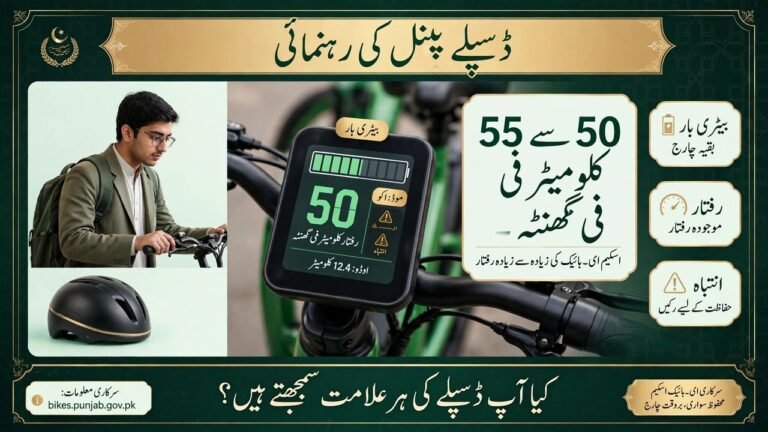
The scheme bike has a 72V 30Ah LFP battery and a 1000W motor, with a top speed of 50 to 55 km per hour. That power is useful on dry roads, but in rain the safe speed is much lower. Slow down early, keep a bigger gap from other vehicles, and never rush through standing water.

Slow Down Before the Wet Patch
The most common rain mistake is braking late. Wet brakes grip less, and a sudden brake can lock a wheel and throw the bike sideways. Slow down before you reach a wet patch, a turn, or a crossing, not on it.
- Reduce Speed Early: drop your speed well before turns and crossings.
- Brake Gently: press both brakes softly and evenly, never one brake hard.
- Keep Distance: leave twice the normal gap from the vehicle ahead.
- Avoid Sudden Moves: no sharp turns or sudden lane changes on wet roads.
See and Be Seen in the Rain
Rain reduces visibility for you and for every driver around you. Your lights, your helmet, and your clothing all matter more in bad weather. A rider who cannot be seen is a rider in danger.
- Lights On: switch your headlight on in rain, even during the day.
- Clean Visor: wipe your helmet visor often so your view stays clear.
- Bright Clothing: wear light or bright colours that drivers can notice.
- Horn Use: use your horn early at blind turns and crowded crossings.
Protect the Battery and Wiring
Your e-bike runs on electricity, so water care is part of rain riding. The battery and motor are built for normal road use, but they are not made for deep water. Never ride through a flooded street where you cannot see the road.
| Rain Risk | What Happens | Safe Action |
|---|---|---|
| Standing water | Hides holes and drains | Stop and turn back |
| Wet brakes | Longer stopping distance | Brake early and gently |
| Deep flood | Damages battery and motor | Do not ride through |
| Wet charging point | Electric shock risk | Charge only when dry |
- Avoid Deep Water: never ride through water above the footboard level.
- Dry After Rain: wipe the bike dry after a wet ride, including the charging point.
- Charge When Dry: charge only with dry hands and a dry charging point.
- Check the Battery: if the bike behaves oddly after rain, get it checked promptly.
After a rainy ride, park the bike under cover and let it dry. Do not spray water directly at the battery box or the display. A dry cloth and a little patience protect the bike far better than a fast wash.
What to Carry on a Rainy Day
A little preparation makes a rainy ride much easier. Pack your rain gear the night before, so a morning shower does not make you late for class. Keep your books and phone dry, because wet books and a dead phone cause problems all day.
- Raincoat Ready: keep a light raincoat in your bag during the rainy season.
- Waterproof Bag: carry books and phone in a waterproof cover or plastic bag.
- Extra Cloth: keep a small cloth to wipe the visor and the display.
- Phone Charged: charge your phone fully, in case you need help on the road.
Plan your route before you leave. Choose main roads with good drainage, and avoid low streets that flood first. Leave home ten minutes early, because rain always makes traffic slower. A calm, early start is safer than a fast, late ride.
When to Stop and Wait
Sometimes the safest choice is not to ride at all. Heavy rain, thunder, and strong wind make riding unsafe for any student. No class is worth a crash on a flooded road. If the rain is very heavy, wait under a safe shelter and ride only when it eases.
- Heavy Rain: stop and wait if you cannot see the road clearly ahead.
- Thunder Risk: never ride in a thunderstorm; wait indoors until it passes.
- Strong Wind: stop if the wind is pushing the bike sideways.
- Tell Your Family: inform your family if you stop somewhere on the way.
Students should also know their route before the rainy season starts. Note which streets flood, which underpasses fill first, and where safe shelters are. That knowledge, learned on dry days, saves you on wet days.
Check your official scheme status only on the official portal, at bikes.punjab.gov.pk. Riding advice never changes your scheme record, and no one can charge you a fee for rain tips or safety help.
FAQs
Can I ride my scheme e-bike in the rain?
Yes, in light rain with care. Avoid deep water, slow down early, and keep lights on.
What should I do after a wet ride?
Wipe the bike dry, especially the charging point, and park it under cover.
Can I charge the bike when it is wet?
No. Charge only with dry hands and a dry charging point, to avoid any shock risk.
Why do brakes feel weak in the rain?
Wet brakes grip less, so stopping distance grows. Brake early and gently with both brakes.
Should I ride in heavy rain or a storm?
No. Stop under safe shelter and wait until the rain eases and the road is visible again.
Conclusion
Rain riding is slow riding. Reduce your speed, brake early, keep your lights on, and protect your battery from deep water. Carry a raincoat, keep your phone charged, and choose main roads with good drainage.
When the rain is too heavy, stop and wait. A safe arrival, even if late, is always better than a fast ride that ends in a fall.