E-Bike Insurance Claim Guide – Accident and Damage Claims Explained

Many students ask what to do if their Punjab e-bike meets with an accident or gets damaged. A wrong step at the start can make a claim harder later, so the first hours matter.
This guide explains the claim process in simple steps. Where a claim timeline or fee is not officially confirmed, this guide says so clearly, and students should confirm it with Bank of Punjab or the official portal.
What Does Govt Covered Insurance Mean For Students
Under the Phase 2 student package, the total price is Rs 199,000.
- Total Price: Rs 199,000 for the Phase 2 student e-bike.
- Government Subsidy: Rs 90,000, leaving Rs 109,000 for the student.
- Monthly Installment: Rs 3,028 per month for 36 months.
- Government Covers: Insurance, markup, registration, and token tax.
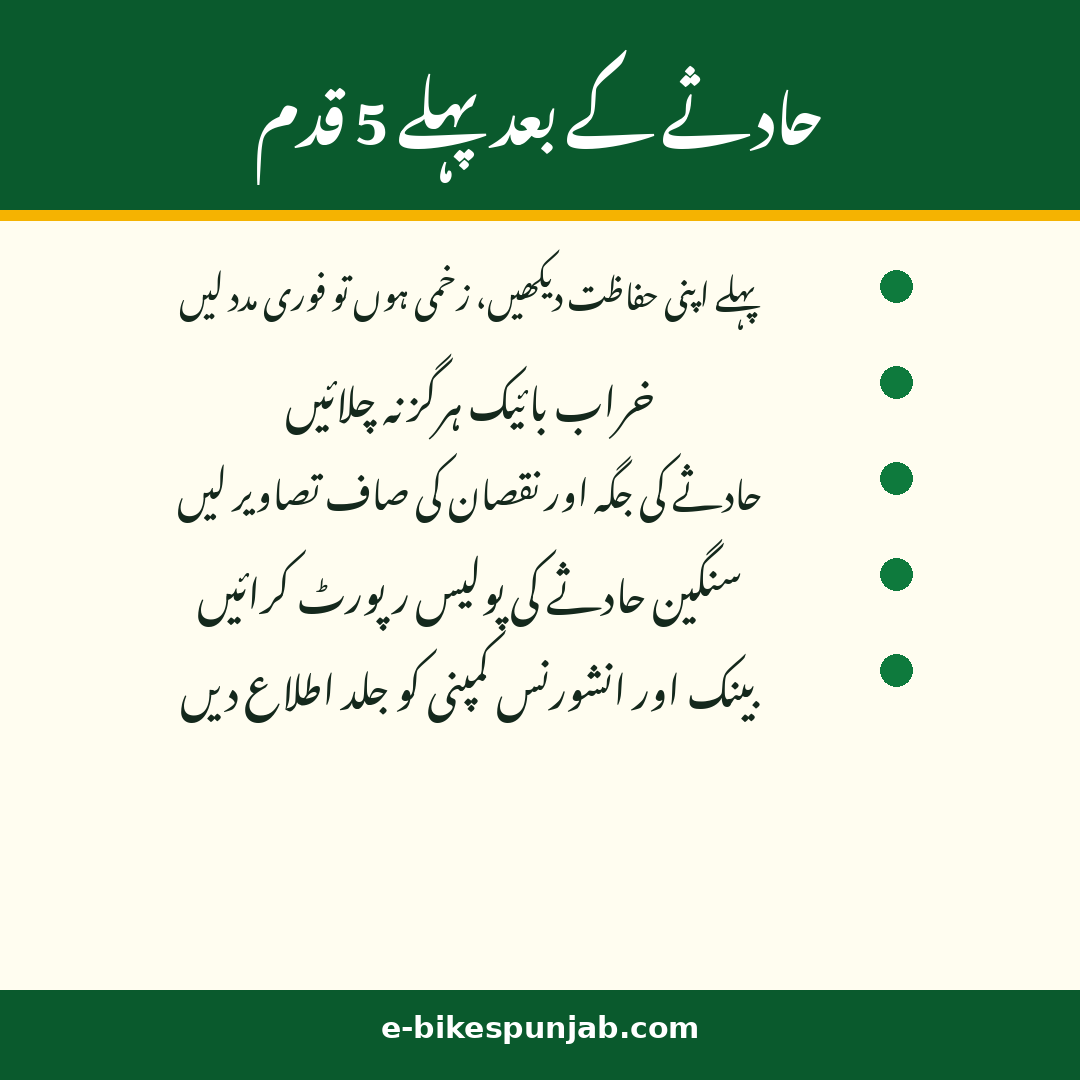
What To Do First At The Accident Scene
Safety comes before any claim paper.
- Check Safety First: Get medical help at once if anyone is injured.
- Move To Safety: Step away from traffic and avoid a dangerous spot.
- Do Not Ride Damaged Bike: Never ride with brake, wheel, handle, or battery damage.
- Take Scene Photos: Capture the bike, road, and damage from different angles.
Photos And Proof You Should Collect
Insurance claims depend on proof.
- Full Bike Photo: One clear photo showing the whole bike from the side.
- Damage Close-Ups: Separate close photos of every damaged part.
- Battery And Motor Area: Photos of the battery box and motor area if affected.
Should You Report The Accident To Police
A police report is important when another vehicle is involved or someone is injured.
- Serious Accident: Report at once if someone is injured or another vehicle is involved.
- Report Copy: Keep a copy or photo of the report number and statement.
How To Inform The Bank And Insurer Step By Step
Students should inform the bank and insurer as early as possible.
| Step | What To Do |
|---|---|
| 1. Safety | Get help and move to safety |
| 2. Photos | Take scene and damage photos |
| 3. Report | Report serious cases to police |
| 4. Inform | Inform bank and insurer early |
| 5. Documents | Submit papers, photos, report |
| 6. Inspection | Wait for inspection advice |
| 7. Follow Up | Record every call and visit |
- Inform Early: Do not wait for days before informing the bank and insurer.
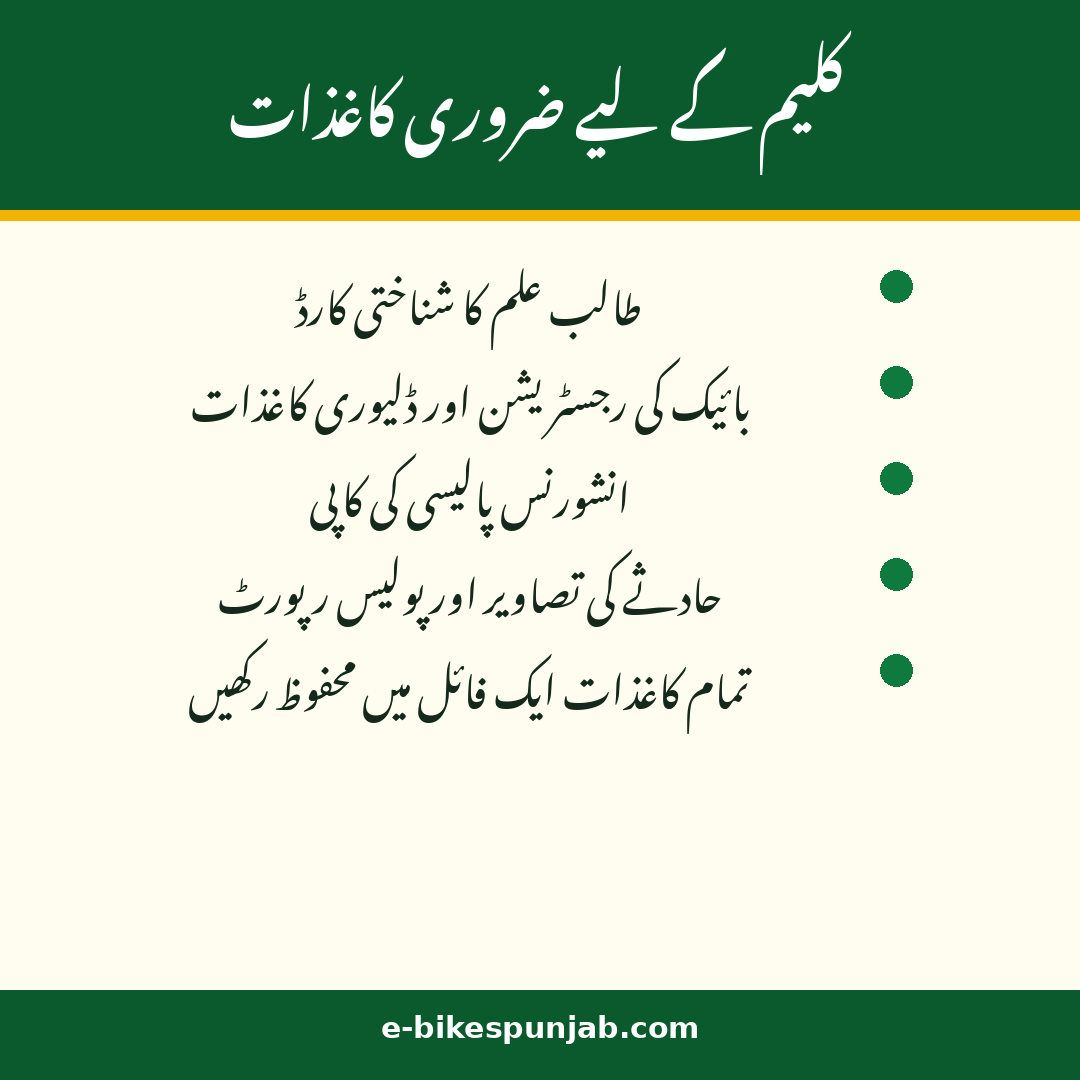
Documents Needed For An Insurance Claim
A claim file moves faster when documents are ready in one folder.
- Student CNIC: Copy of the student’s identity card.
- Bike Papers: Registration and delivery papers for the e-bike.
- Insurance Papers: Policy copy or insurance details given at delivery.
- Accident Photos: Scene photos and close photos of all damage.
- Police Report: Report copy or report number, where applicable.
Repair Vs Insurance Claim: Which Option Is Right
Not every scratch needs an insurance claim.
| Situation | Best Action |
|---|---|
| Small scratch only | Ask insurer if a claim is needed |
| Broken part | Report and wait for inspection |
| Battery damage | Do not charge or use it |
| Brake or wheel damage | Do not ride, arrange transport |
| Another vehicle involved | Police report, inform insurer |
- Small Damage: A tiny scratch may not need a full claim.
- Major Damage: Major damage should go through the insurer.
- Battery Safety: Never charge, open, or ride with a damaged battery.
Common Mistakes That Delay Insurance Claims
Many claims are delayed by small mistakes: a missing photo, a late notice, or a repair done too early.
- Late Notice: Waiting too long to inform the bank or insurer.
- Early Repair: Repairing major damage before inspection advice.
- Missing Photos: No scene photos or only one unclear photo.
- No Written Record: No note of calls, visits, or advice received.
After the first hours, the claim file becomes the most important part of the process. Keep every paper, photo, and message in one folder, in date order, so the file can be explained in a few minutes. Write down the date and time of the incident, the place, the weather and road condition, and the names of any witnesses, while the memory is still fresh. A note written the same day is far more reliable than a memory recalled weeks later, when dates and details have blurred.
Communication with the bank and insurer should also be written, wherever possible. After a phone call, send a short written summary of what was discussed, what was asked for, and what was promised, and keep a copy. If an officer asks for a document, note the request, the date, and the person who asked, and submit the document with a covering note that lists everything enclosed. If a document is returned, or if a further document is requested, update the same folder, so nothing is submitted twice and nothing is lost.
Theft needs a different first response from damage, and students should know the difference. If the bike is stolen, report it at once through the proper channel, keep a copy of the report, and inform the bank and insurer in writing without delay. Do not delay a theft report in the hope that the bike will be found, because a late report can weaken a claim. Keep the bike papers, the delivery receipt, and the registration record safe, because they prove ownership and the loan case. Never buy back a stolen bike from an unknown person, and never pay a person who claims to know where the bike is.
- Incident Note: write date, time, place, weather, road condition, and witnesses on the same day.
- Written Communication: summarise every phone call in writing, and keep a copy with the claim file.
- Theft Report: report theft at once, keep the report copy, and inform bank and insurer in writing.
- Ownership Papers: keep delivery receipt, registration, and loan papers together for any claim.
- No Private Buyback: never pay an unknown person who claims to know where a stolen bike is.
Minor damage and major damage also need different thinking. A small scratch, with no safety part affected, may not need a full claim, and the insurer can advise whether a claim is worthwhile. A broken brake, wheel, handle, or battery is a safety matter, not a cosmetic matter, and the bike must not be ridden until it is checked. A damaged battery deserves special care: do not charge it, do not open it, do not store it near flammable items, and ask the insurer and service channel what to do with it. Battery damage that looks small on the outside can still be dangerous inside.
Finally, keep riding after a claim in perspective. A claim does not end the loan, and installments continue under the agreement unless the bank confirms otherwise in writing. Ask the bank, in writing, whether installments continue during a claim, and keep that answer with the claim file. If the bike is written off, or if it cannot be repaired, ask for the written procedure that applies to your case, and do not assume the loan ends automatically. A written answer, kept with the file, prevents a second problem from growing out of the first.
- Minor vs Major: small cosmetic damage and safety damage are handled differently; ask the insurer first.
- Battery Rule: never charge, open, or ride with a damaged battery, and ask for safe handling advice.
- Installment Continuity: ask the bank in writing whether installments continue during a claim.
FAQs About E-Bike Insurance Claims
Is insurance cost covered for students?
Yes, the government covers insurance, markup, registration, and token tax under the student package.
What should I do first after an accident?
Check safety and get medical help if needed.
Do I need a police report for every scratch?
A police report is important in serious cases and when another vehicle is involved.
Can I repair the bike before the insurer sees it?
For major damage, do not repair before inspection if the insurer has asked for it.
What if the battery is damaged?
Do not charge, open, or use a damaged battery.
Where can I confirm the claim process?
Confirm the claim steps on the official portal at bikes.punjab.gov.pk and with Bank of Punjab.
Conclusion
An insurance claim is not difficult when the first steps are right. Keep every paper in one folder and never ride a damaged bike.
For the latest scheme information, visit bikes.punjab.gov.pk and confirm any claim timeline or fee with Bank of Punjab before acting. That single habit protects both the student and the claim.