E-Bike Battery, Charging Cost and Range – 72V 30Ah LFP Complete Guide

The battery is the most important part of an electric bike. It decides how far the bike can travel, how much charging costs, and how long the bike stays useful. This guide explains the 72V 30Ah LFP battery in simple words for students.
The CM Punjab E-Bike Scheme 2026 is providing 100,000 electric bikes to students. Applications were open from 5 September to 4 October 2026 and are now closed. Registrations reached 1,149,058 by 1 October 2026, including 222,101 female students, and crossed 1.3 million by the deadline.
Balloting has been announced for 4 November 2026, and distribution is planned from 5 November 2026. Students should confirm their own status only on the official portal, bikes.punjab.gov.pk. This guide does not claim that an official selected list is out.
What Does 72V 30Ah LFP Mean?
The numbers on a battery describe its power and capacity. Voltage, written as V, shows the power level of the system. Amp-hours, written as Ah, show how much charge the battery can store.
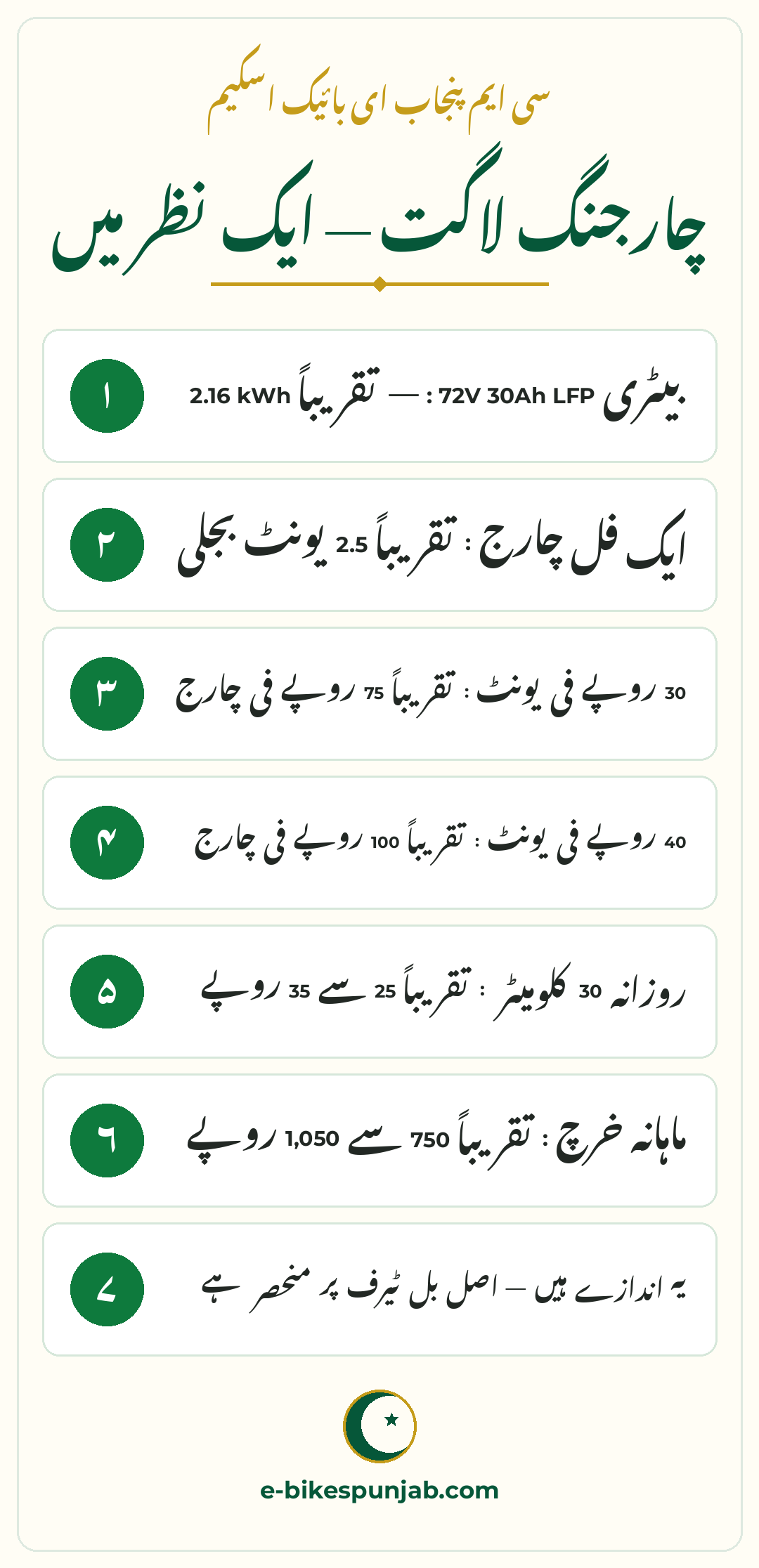
A 72V 30Ah battery stores about 2,160 watt-hours of energy. This is calculated by multiplying 72 by 30, which gives 2,160 Wh, or 2.16 kWh. A larger watt-hour number usually means a longer range, but speed, weight and road conditions also matter.
LFP stands for Lithium Iron Phosphate. It is a type of lithium battery known for safety and long life. LFP batteries handle heat better than some other lithium types, and they usually last for more charge cycles.
72V 30Ah LFP Battery Specifications at a Glance
| Specification | Detail |
|---|---|
| Voltage | 72V |
| Capacity | 30Ah |
| Total energy | About 2.16 kWh (72 × 30) |
| Battery type | LFP (Lithium Iron Phosphate) |
| Known for | Safety, stable chemistry, long cycle life |
| Typical use | Daily student commuting in city traffic |
These figures help students understand what they are getting. The exact range and charging time can vary by bike model and riding style. Students should always check the model details given at delivery, not just general guides.
How Far Can a 72V 30Ah E-Bike Travel on One Charge?
Range means the distance a bike can travel on a full charge. For a 72V 30Ah battery, many city e-bikes offer a practical range of about 70 to 100 kilometres, depending on conditions. This is an estimate for planning, not a guaranteed figure for every model.
Speed has a big effect on range. Riding at a steady, moderate speed gives more range than riding at full speed all the time. Frequent fast acceleration also uses more battery than smooth, steady riding.
- Rider weight: A heavier load reduces range, while a lighter load increases it.
- Road type: Flat city roads give better range than steep or rough roads.
- Traffic stops: Constant stopping and starting uses more energy than steady travel.
- Tyre pressure: Low tyre pressure increases resistance and reduces range.
- Weather: Very cold or very hot weather can slightly reduce battery performance.
For most students, a daily trip of 10 to 30 kilometres is easy on one charge. Even a 40-kilometre round trip to college leaves reserve range in most cases. Students with longer routes should plan a charging point in advance.
How Long Does Charging Take?
Charging time depends on the charger and the battery level. A full charge from empty usually takes several hours with a standard home charger. Most students charge overnight, so the bike is ready in the morning.
A partial top-up is faster and is often enough for the next day. For example, if the battery is half full, topping it up takes much less time than a full charge. Students should not wait until the battery is fully empty before charging.
| Charging Situation | Practical Tip |
|---|---|
| Overnight charging | Best routine: plug in at night, ride in the morning |
| Partial charge | Top up when battery falls below 40–50% |
| Daily short trip | Charge every 2–3 days if range allows |
| Long daily trip | Charge every night to keep full range |
Always use the charger supplied with the bike. A wrong charger can damage the battery or create a safety risk. The charger and cable should be kept dry, clean and away from heat.
What Is the Charging Cost of a 72V 30Ah E-Bike in Pakistan?
Charging cost is simple to estimate. One full charge uses about 2.16 units of electricity, plus small charging losses. In practice, students can plan for about 2.5 units per full charge.
At a home electricity rate of Rs 30 per unit, one full charge costs about Rs 75. At Rs 40 per unit, it costs about Rs 100. The exact cost depends on the student’s home tariff slab and total household usage.
| Electricity Rate | Estimated Cost per Full Charge |
|---|---|
| Rs 25 per unit | About Rs 63 |
| Rs 30 per unit | About Rs 75 |
| Rs 40 per unit | About Rs 100 |
| Rs 50 per unit | About Rs 125 |
These are estimates for budgeting only. The real bill depends on the electricity tariff, charger efficiency and battery condition. Even at the higher rate, the cost per kilometre remains far lower than petrol.
Daily and Monthly Charging Cost Comparison
A student who travels 30 kilometres per day will use only part of a full charge. If one full charge covers about 80 kilometres, the daily cost is roughly one-third of a full charge. That is about Rs 25 to Rs 35 per day at common home rates.
Over a month, this gives a charging cost of about Rs 750 to Rs 1,050 for daily college travel. A petrol bike for the same distance would cost several times more in fuel alone. This is why electric bikes save money for students over time.
- Daily travel 20 km: About Rs 20–25 per day in charging cost.
- Daily travel 30 km: About Rs 25–35 per day in charging cost.
- Daily travel 50 km: About Rs 45–60 per day in charging cost.
- Monthly estimate: About Rs 600–1,500, depending on distance and tariff.
These estimates do not include the monthly bike instalment. The scheme bike costs Rs 109,000 to the student after the Rs 90,000 subsidy on the Rs 199,000 price. That is paid as Rs 3,028 per month for 36 months, at 0% markup, with no down payment.
How to Make the Battery Last Longer
Battery life depends on daily habits. Good charging habits can extend battery life by months or years. Bad habits, like deep discharge and overheating, shorten it.
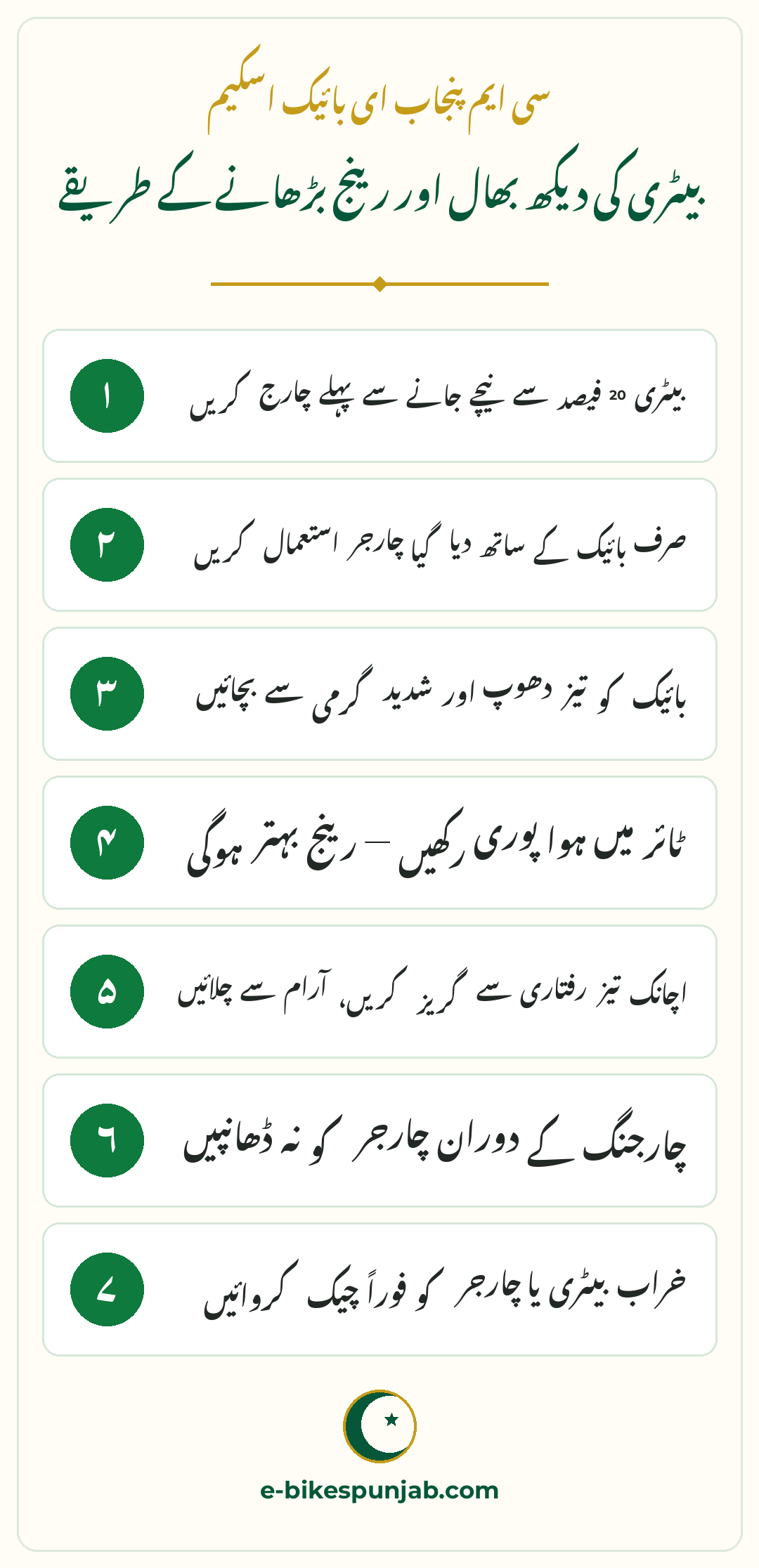
- Charge before the battery drops below 20% whenever possible.
- Avoid leaving the bike in direct sun or extreme heat for long hours.
- Do not use fast or unmatched chargers not approved for the bike.
- Keep the battery dry and clean, and check connections monthly.
- Ride smoothly, avoid sudden acceleration, and keep tyres inflated.
- If the bike will not be used for weeks, store it with a partial charge.
LFP batteries are known for a long cycle life, often thousands of cycles. A cycle means one full charge and discharge. With careful use, the battery should serve well through the student’s study years.
Battery Safety Rules Every Student Must Follow
Battery safety is simple but must be followed every time. Never charge a damaged battery, and stop charging if the battery, charger or cable feels unusually hot or smells burnt. In that case, unplug safely and contact authorised service.
Charge in a ventilated place, away from bedding, curtains and flammable items. Do not cover the charger while it is working, and do not charge in rain or standing water. Keep children away from the charging area.
Students should also attend the free 2-day safety training provided with the scheme. Training covers safe riding, daily checks and basic care. A free helmet and safety rod are also provided, and the government covers insurance, markup and registration costs.
Scheme Price, Balloting and Distribution Reminder
| Scheme Point | Detail |
|---|---|
| Total bikes | 100,000 |
| Applications | 5 September to 4 October 2026 (closed) |
| Registrations | 1,149,058 by 1 October; 1.3m+ by deadline |
| Balloting announced | 4 November 2026 (PITB e-balloting) |
| Distribution from | 5 November 2026 |
| Student cost | Rs 109,000 (Rs 3,028 × 36 months, 0% markup) |
| One bike per family | Yes |
| Verification | Bank of Punjab |
Pink bikes are for girls and black bikes are for boys under the same scheme. Teachers follow a separate track at ptf.punjab.gov.pk. Students must check only bikes.punjab.gov.pk for their own balloting and delivery status.
Conclusion
A 72V 30Ah LFP battery gives students a practical range, low charging cost and a long, safe service life. With a full-charge cost of roughly Rs 75 to Rs 100 and a monthly charging cost well below petrol, it is an affordable daily option. Charge carefully, ride smoothly, and follow only the official portal for scheme updates.