First Week Riding Plan After E-Bike Delivery

Getting your electric bike is an exciting moment, but the first week matters more than the first ride. How you ride, charge, and check the bike in these seven days will set your habits for the months ahead.
Your bike comes with a free helmet, a safety rod, and two days of training: use them fully.
Before Day 1: Delivery Day Checks
On delivery day, do not rush out.
- Helmet and Safety Rod: Confirm you have received the free helmet and the safety rod with the bike.
- Full Charge Check: Check the battery level display and ask the staff about the first charging routine.
- Brakes Test: Press both brakes slowly while standing still and confirm they feel firm and even.
- Lights and Horn: Test the headlight, indicators, and horn before leaving the delivery point.
- Tyre Check: Look at both tyres for proper air pressure and any visible damage.
- Paper Record: Keep the delivery papers safe and note the dealer contact for any later question.
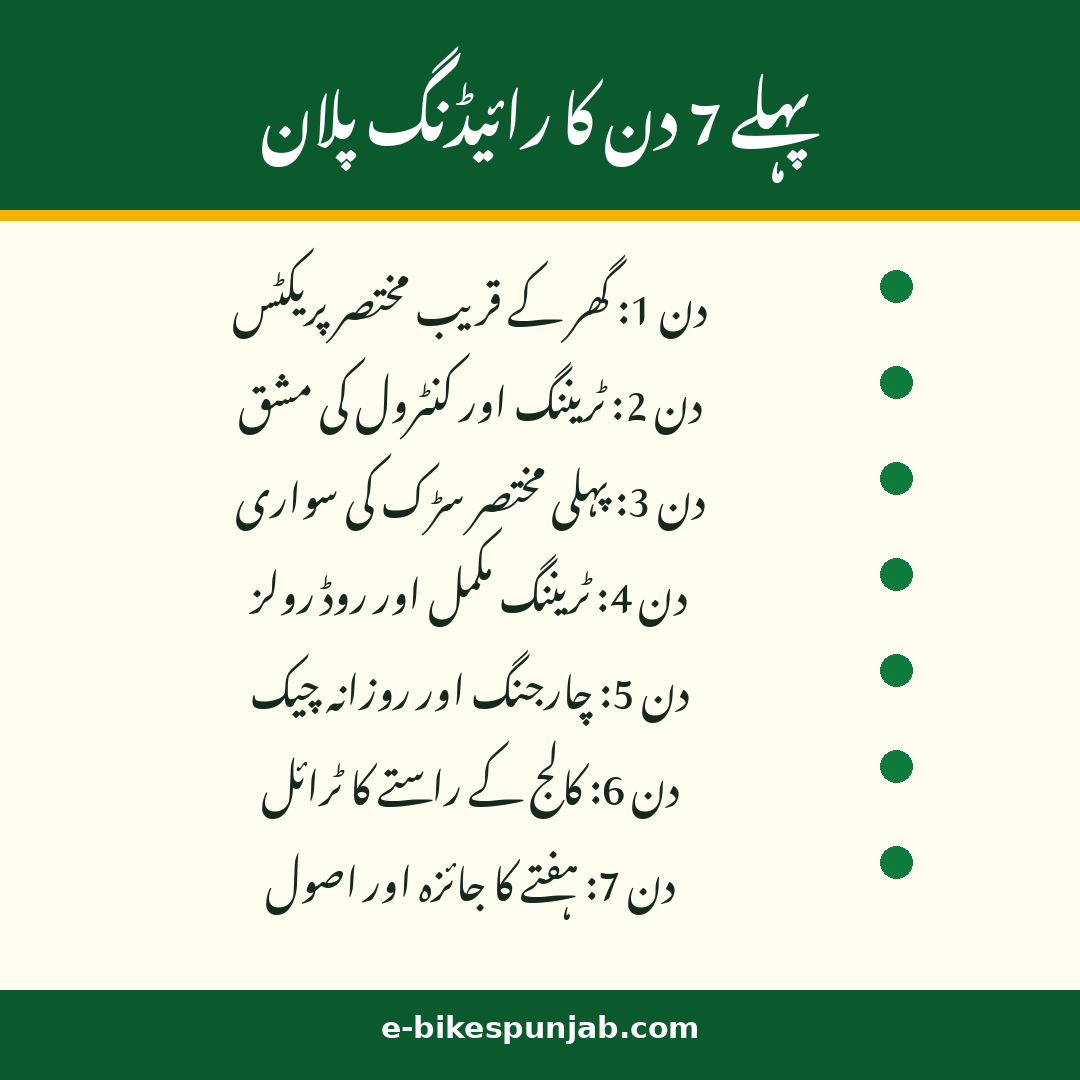
Day 1: Short Practice Close to Home
Day 1 is for learning, not travelling.
- Quiet Location: Practise only in a quiet street or open ground on day 1.
- Short Ride: Keep the first ride to 10-15 minutes and stop if you feel unsure.
- Smooth Braking: Practise gentle braking with both brakes until stopping feels natural.
- Helmet Always: Wear the helmet on every ride, including short practice rides.
Day 2: Training Day and Control Skills
Take the free two-day training seriously.
- Attend Training: Attend the full training session and listen to every safety instruction.
- Ask Questions: Ask the trainer about braking, balance, and traffic situations you fear.
- Repeat Practice: Repeat day 1 practice after training to fix the correct habits.
- Slow Turns: Practise slow, wide turns before trying any sharp turn.
Day 3: First Short Road Ride
On day 3, try a short real road ride on a familiar, less busy route.
- Familiar Route: Choose a short, familiar route with light traffic only.
- Low Speed: Ride well below the 50-55 km/h top speed while you are still learning.
- Safe Distance: Keep a clear gap from cars, rickshaws, and other bikes at all times.
- Inform Family: Tell a parent or family member your route before leaving home.
Day 4: Second Training Day and Road Rules
Day 4 completes the two-day training.
- Complete Training: Finish the second training day and revise all safety points at home.
- Road Rules: Learn lane use, signals, and pedestrian crossing rules properly.
- Same Route Again: Repeat a familiar route so traffic sense grows with confidence.
- Note Weak Points: Write down the spots that felt difficult and practise them again.
Day 5: Charging Routine and Daily Checks
By day 5, charging should be a fixed habit.
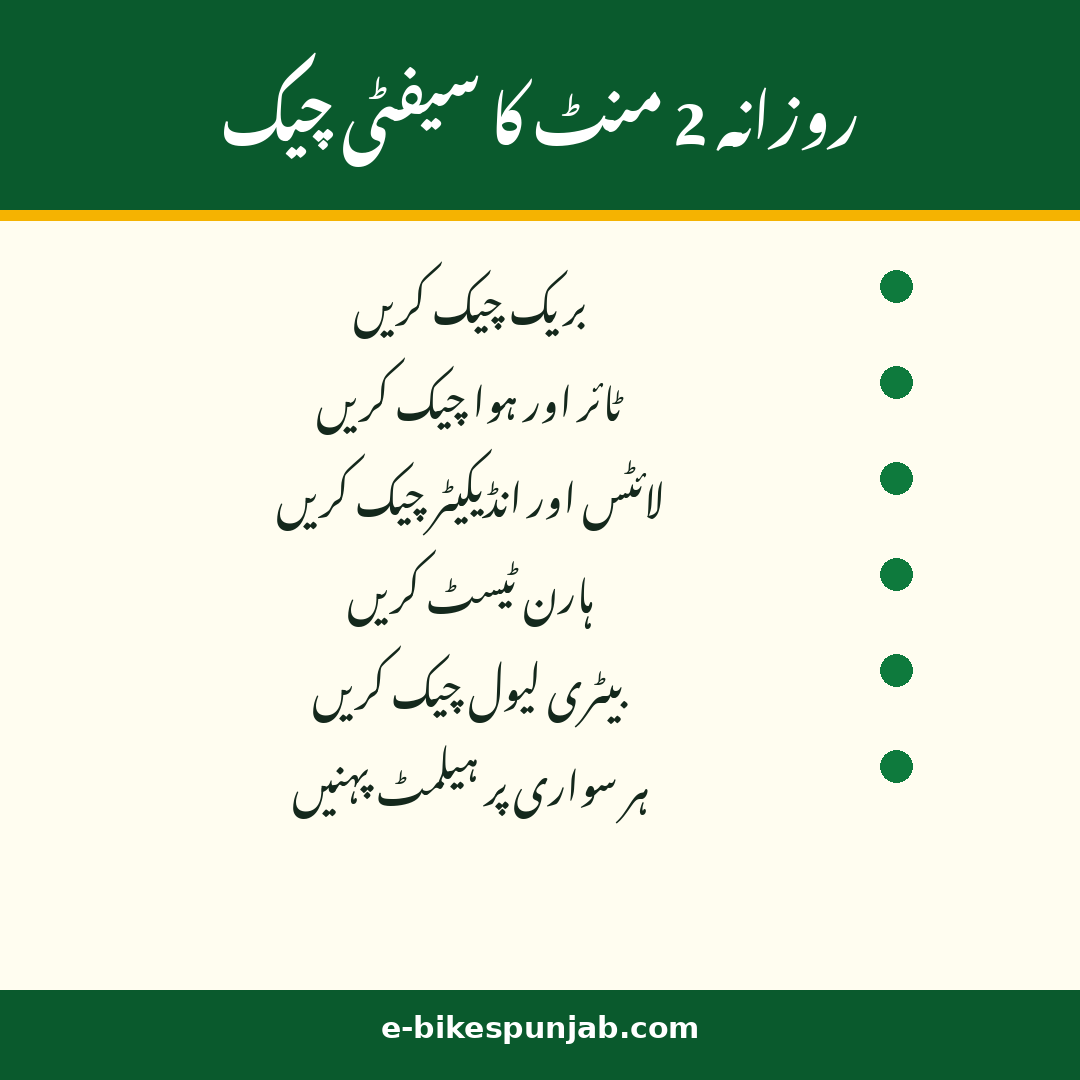
| Daily Check | What to Do |
|---|---|
| Brakes | Press both, check firm feel |
| Tyres | Check air and damage |
| Lights | Test headlight and indicators |
| Horn | Test once before riding |
| Battery | Check level before leaving |
- Safe Charging Place: Charge only in a safe, dry place away from flammable items.
- Check the Cable: Never use a damaged charger cable; report damage at once.
- Two-Minute Check: Do the five-point daily check before every ride.
- Plan the Charge: Charge in time so the battery is ready before college hours.
Day 6: First College Route Trial
Day 6 is a good day to trial your real college route at a quiet time rather than peak rush.
- Quiet Time Trial: Trial the college route at a quiet time, not in peak rush.
- Note Travel Time: Record how long the route takes at safe, steady speed.
- Safe Parking: Find a safe, visible parking place near your college.
- No Racing: Never race other vehicles; arrive calm and safe instead.
Day 7: First Week Review and Next Week Plan
On day 7, sit with your family and review the week honestly: what went well, which skill still needs practice, and whether the charging routine is working.
| Day | Focus |
|---|---|
| Day 1 | Short practice near home |
| Day 2 | Training and control skills |
| Day 3 | First short road ride |
| Day 4 | Training and road rules |
| Day 5 | Charging and daily checks |
| Day 6 | College route trial |
| Day 7 | Week review and rules |
First Week Riding Mistakes to Avoid
Most first-week problems come from excitement, not the bike.
- No Speeding: Stay well below top speed during the whole first week.
- No Helmet Skip: Never skip the helmet, even for a two-minute ride.
- No Rush Hours: Avoid peak traffic until your control feels fully natural.
- No Night Risk: Avoid night riding in week 1 unless lights and route are fully familiar.
- Confirm Status: Confirm delivery notices on official portal before travelling.
The first week also teaches you how your own body and the bike work together. An electric bike is heavier and faster than a bicycle, so balance, braking distance, and turning feel different at first. Practise stopping from a slow speed, then from a slightly higher speed, in a safe place, so you learn how far the bike travels before it stops. Practise looking over your shoulder without swerving, and practise signalling with one hand while keeping control with the other. These small skills matter far more than top speed in real traffic.
Traffic sense grows only with calm repetition. On a busy road, watch the vehicle ahead, the vehicle behind, and the side roads at the same time, and keep a gap that gives you room to stop. Do not follow a large vehicle so closely that you cannot see the road ahead. At junctions, slow down even if the road looks clear, because a pedestrian, a cyclist, or a vehicle from a side street can appear suddenly. If you feel rushed by traffic behind you, pull over safely and let it pass, rather than speeding up beyond your comfort level.
Weather and road conditions deserve their own first-week rules. In rain, braking takes longer, painted road markings become slippery, and visibility drops for every road user. Slow down, increase your following distance, and wear clothing that keeps you visible without loose ends that can catch in a wheel. In strong wind, hold the handlebar firmly and expect a sudden push from the side, especially on open roads. If visibility is very low, or if a road is flooded, postpone the ride if you can. Arriving late is always better than arriving injured.
- Braking Practice: practise stopping from slow speed, then slightly higher speed, in a safe place.
- Traffic Gap: keep a clear stopping gap, and never follow a large vehicle too closely.
- Junction Rule: slow down at every junction, even when the road looks clear.
- Rain Rule: slow down, increase distance, and avoid flooded or very slippery roads.
- Visibility Rule: wear visible clothing, keep lights on when needed, and keep the visor clean.
By the end of the week, build a simple maintenance habit that will last for years. Check tyre pressure, brake feel, lights, horn, and battery level before every ride, and note anything that feels different from the day before. A soft tyre, a loose brake, or a dim light is a warning, not a minor detail. Report a fault early, through the proper service channel, and do not ride a bike with a brake, wheel, or battery fault. Keep a small notebook, or a phone note, of service dates, charging habits, and any fault you noticed, so a service visit can be explained clearly.
- Daily Habit: brakes, tyres, lights, horn, and battery checked before every ride.
- Fault Rule: report a brake, wheel, or battery fault early, and do not ride with it.
- Service Note: record service dates, charging routine, and faults in one place.
FAQs
How long should the first ride be?
Keep the first ride to 10-15 minutes in a quiet street or open ground near home.
Is the two-day training really necessary?
Yes.
When can I start riding to college daily?
After the day 6 route trial, if the ride felt safe and controlled.
How do I charge the bike safely?
Charge in a safe, dry place away from flammable items, using the given charger and cable.
What is the top speed of the scheme bike?
The bike has a 1000W motor with a top speed of 50-55 km/h and a 72V 30Ah LFP battery.
Has a district-wise delivery schedule been released?
No district-wise delivery schedule has been officially released.
Conclusion
The first week is about patience, not speed. Short practice, full training, a fixed charging routine, and a daily two-minute check will make you a safe and confident rider.
Follow this plan day by day, wear your helmet on every ride, and let your skill grow before your speed does. A careful first week leads to a safe full year on your new e-bike.