Pillion Rules for E-Bike Students 2026: Can You Carry a Passenger?

Many students ask the same question after getting their scheme e-bike: can a friend or a family member ride on the back seat? This pillion rules guide explains the answer in simple words, so no student breaks a rule by mistake and no one puts a passenger at risk.
Latest Details
Latest update — 22 November 2026: Phase 2 registration for the CM Punjab E-Bike Scheme closed on 4 October 2026, and no new application window has been announced. Distribution of the 100,000 Phase 2 bikes will begin in December 2026 — Chief Minister Maryam Nawaz Sharif announced the revised schedule on 10 November 2026 in Jhelum, after the earlier 5 November date passed without distribution starting. No exact December date has been announced yet.
The balloting result is still awaited as of 22 November 2026, and no official winner list has been published, so check your own status only on your dashboard at bikes.punjab.gov.pk. While you wait, keep the arrangements in this guide ready — charging point, parking place and papers — because no district-wise delivery schedule has been announced yet.
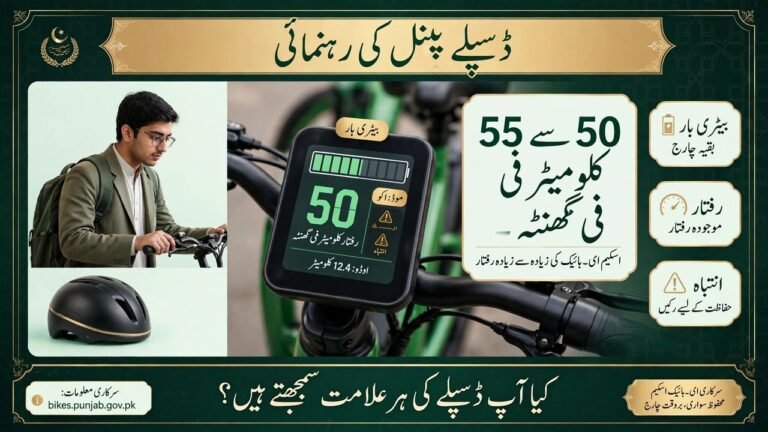
The scheme bike has a 1000W motor and a top speed of 50 to 55 km per hour. It is built for daily student travel on city roads. Carrying a passenger changes the weight, the braking distance, and the balance of the bike, so the answer is not a simple yes for every ride.

What Pillion Riding Means
Pillion riding means carrying a second person on the back seat of the bike. The passenger sits behind the rider, holds on, and wears a helmet too. On a small electric bike, the extra weight matters much more than on a large petrol bike.
- Extra Weight: a passenger adds weight that changes braking and balance.
- Longer Stopping: the bike needs more distance to stop with two people.
- Less Stability: turns and sudden moves become harder with a passenger.
- Second Helmet: the passenger needs a helmet just like the rider.
Before you carry anyone, check the rules that apply to your bike and your area. Traffic rules can differ by place, and the scheme expects students to follow the law. When you are unsure, do not carry a passenger until you have confirmed the rule from an official source.
When Pillion Riding Is Risky
Some rides are risky even without a passenger. With a passenger, the same ride becomes much more dangerous. Short, slow, familiar trips are very different from long, fast, or crowded ones.
- Rainy Roads: wet roads and a passenger together raise the fall risk sharply.
- Night Rides: low light and a passenger make the bike harder to control.
- Busy Roads: heavy traffic leaves no room for the slower reactions of a loaded bike.
- Long Trips: long rides tire the rider, and a tired rider is a slow rider.
Rules Every Rider Should Follow
Whether or not you carry a passenger, the basic road rules stay the same. A licence or learner permit was required for the scheme, and the rider must follow traffic law on every trip. The free two days of riding training also cover safe riding habits, and students should use what they learned.
| Situation | Safe Choice | Why It Matters |
|---|---|---|
| Short daylight trip | Ride slowly, both helmeted | Best control and view |
| Rain or fog | Do not carry a passenger | Brakes and grip are weak |
| Night ride | Avoid a passenger | Low light, slow reactions |
| Child passenger | Never carry a child | Child cannot hold on safely |
- Helmet for Both: rider and passenger must both wear helmets.
- Both Feet Down: the passenger keeps feet on the footrests at all times.
- Hold On Firmly: the passenger holds the rider or the grab rail, never loosely.
- No Phone Use: neither rider nor passenger uses a phone while moving.
What the Loan and Insurance Expect
The scheme bike is financed through the Bank of Punjab. The student pays Rs 109,000 over 36 months at Rs 3,028 per month, with 0% markup and no down payment. The government covers insurance, markup, registration, and token tax. That insurance and the loan agreement expect the bike to be used carefully and lawfully.
- Lawful Use: ride within traffic law on every trip, with or without a passenger.
- No Commercial Use: do not use the scheme bike as a paid taxi or delivery bike.
- One Bike Per Family: only one bike is allowed per family, so share it wisely.
- Care for the Bike: damage from careless use can become your own cost.
Safer Alternatives for a Friend
Many students want to help a friend reach college. There are safer ways to do it than pillion riding on a small e-bike. A short walk together, a bus, or a second bike all keep both students safe.
- Walk Together: for short distances, walking together is the safest choice.
- Public Transport: use a bus or van for longer trips with a friend.
- Plan Meeting Points: agree a meeting point near college instead of sharing one bike.
- Respect a No: if your friend is unsure, do not pressure them to ride pillion.
A good friend will understand a careful no. Your safety, and the safety of your passenger, matters more than saving a few minutes. When in doubt, ride alone and meet your friend at college.
Check your official scheme status only on the official portal, at bikes.punjab.gov.pk. No one can charge you a fee for riding advice, and no agent can change the rules of your scheme bike.
FAQs
Can I carry a friend on my scheme e-bike?
Carrying a passenger changes braking and balance. Check the rules first, and avoid it in rain, fog, or at night.
Does the passenger need a helmet?
Yes. Both the rider and the passenger must wear helmets on every ride.
Can I carry a child on the bike?
No. A child cannot hold on safely, so children must never ride as pillion passengers.
Can I use the bike as a paid taxi?
No. The scheme bike is for student travel only, not for commercial use.
Does pillion riding damage the bike?
Extra weight strains the motor, battery, and tyres, so daily double riding shortens the bike life.
Conclusion
Pillion riding is not a casual choice on a small electric bike. Extra weight, longer braking, and weaker balance all raise the risk, especially in rain, fog, or at night. Children should never ride pillion.
Ride alone when conditions are poor, wear helmets, follow traffic law, and help your friends in safer ways. A careful rider protects both the passenger and the bike.