Rural Students E-Bike Guide 2026: Village Charging and Travel
For a rural student, an e-bike can change daily travel completely. It can also fail on the first week if charging, parking, and road planning were not thought through.
Latest Details
Latest update — 21 November 2026: Phase 2 registration for the CM Punjab E-Bike Scheme closed on 4 October 2026, and no new application window has been announced. Distribution of the 100,000 Phase 2 bikes will begin in December 2026 — Chief Minister Maryam Nawaz Sharif announced the revised schedule on 10 November 2026 in Jhelum, after the earlier 5 November date passed without distribution starting. No exact December date has been announced yet.
The balloting date has not been officially confirmed and no official winner list has been published, so check your own status only on your dashboard at bikes.punjab.gov.pk. While you wait, keep the arrangements in this guide ready — charging point, parking place and papers — because no district-wise delivery schedule has been announced yet.
This guide is for students who live in a village and study in a nearby town or city. It uses only confirmed scheme facts, and it says clearly where you must check locally first.
Daily Distance: Plan Before You Rely On The Bike
Know your real daily distance before you depend on the bike for college.
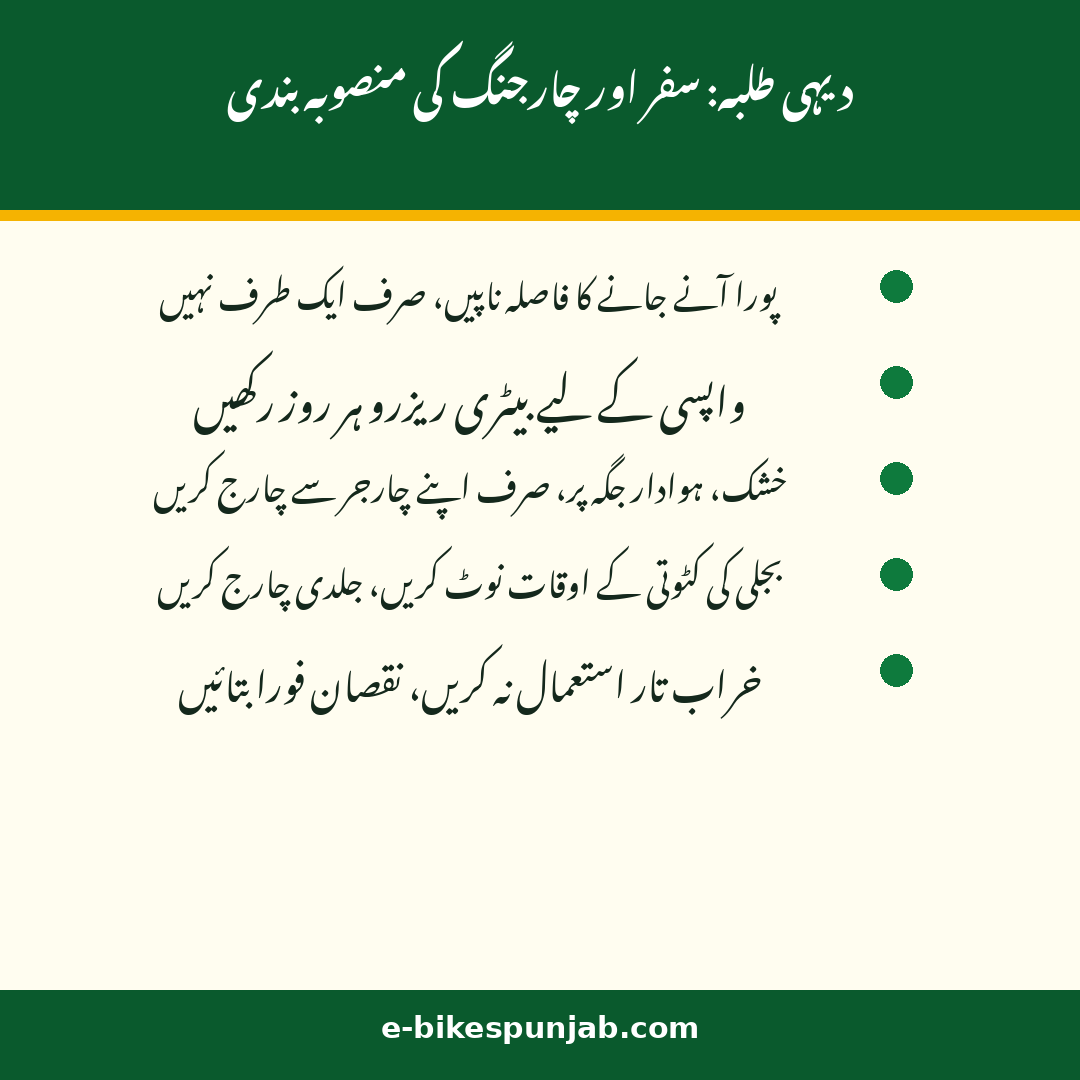
- Measure The Route: measure the full round trip, not only one way.
- Reserve Battery: leave battery reserve for the return trip, every day.
- Bad Road Days: rough roads and headwinds use more battery than smooth roads.
- Backup Plan: keep a backup travel plan for days when charging fails.
Charging At Home In A Village
Home charging must be safe, dry, and approved by your family, not improvised.
| Charging Point | Check First |
|---|---|
| Home socket | Dry and ventilated |
| Shared point | Permission and timing |
| Shop point | Owner permission |
| College point | College permission |
- Dry Place: charge only in a dry, ventilated place, away from water and bedding.
- Own Charger: use only the charger supplied for your bike, and keep it safe.
- Cable Check: never use a damaged cable, and report damage at once.
- Fixed Time: charge at a fixed time, so the bike is ready before college.
Load Shedding And Power Cuts
Power cuts are a normal part of rural life, so your charging routine must survive them.
- Charge Early: start charging early, not late at night before college.
- Check Level: check the battery level before leaving, every morning.
- Half Charge Rule: do not leave with a half-charged bike and no return reserve.
- Note Cut Times: note local cut times, and plan charging around them.
Parking And Safety In A Village
A bike parked in a dark, open place is at risk, even in a quiet village.
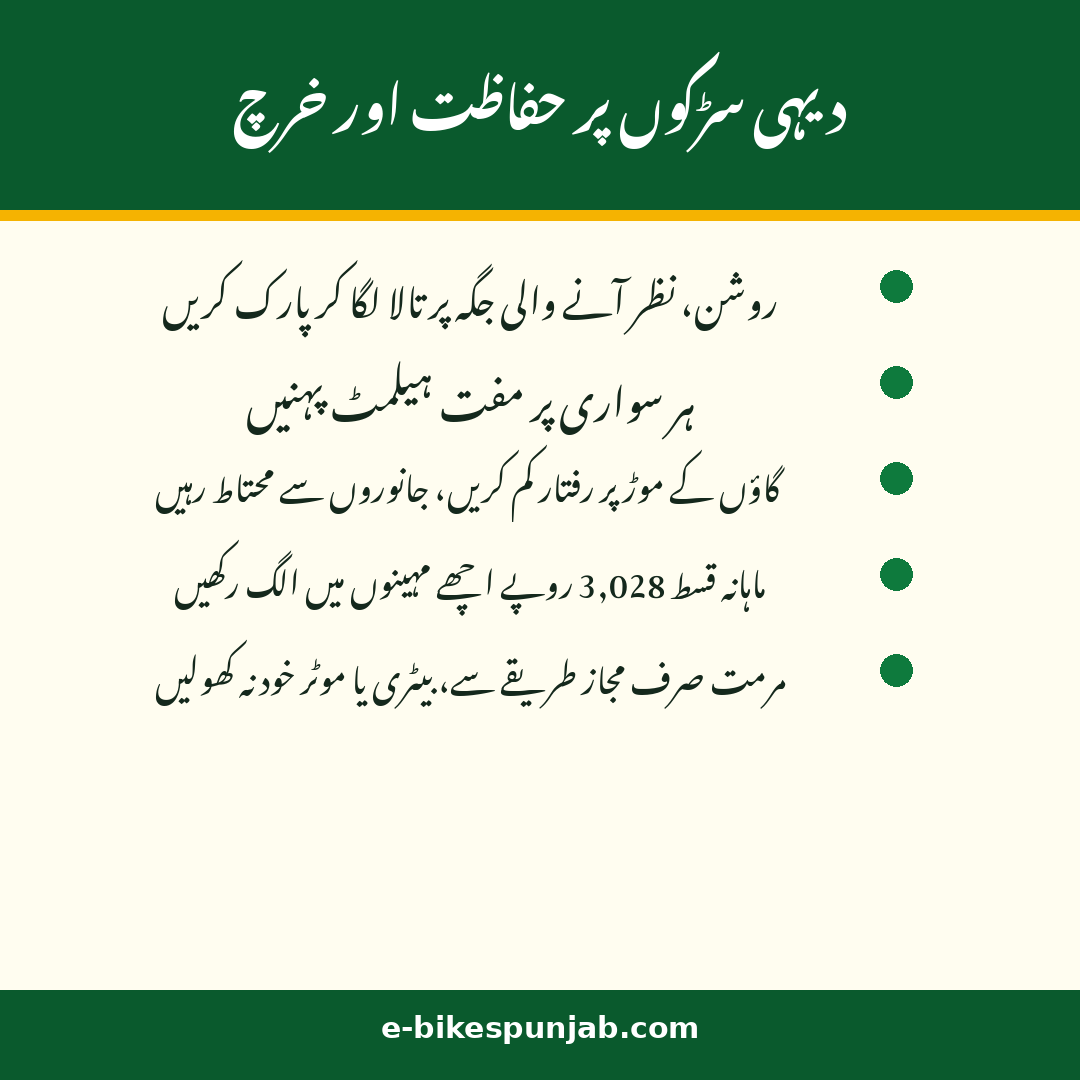
- Lit Place: park in a lit, visible place, locked every time.
- Covered Parking: use a covered place in rain, to protect battery and electrics.
- Family Knows: your family should know where the bike is parked each night.
- No Valuables Left: never leave charger, helmet, or papers on the bike overnight.
Rural Roads: Riding Safely
Rural roads bring their own risks, from tractors and animals to unmarked crossings.
- Slow At Crossings: slow down at every village crossing, even when the road looks clear.
- Animal Risk: expect animals on the road, especially at dawn and dusk.
- Visible Clothing: wear visible clothing, and keep lights on when needed.
- Helmet Always: wear your free helmet on every ride, including short village rides.
Cost Planning For Rural Families
The installment is fixed, but rural families must still plan it into a seasonal income.
- Monthly Amount: Rs 3,028 per month, for 36 months, as part of Rs 109,000.
- Seasonal Income: set the installment aside in good months, for difficult months.
- Family Duty: agree who arranges payment each month, and by which date.
- Guarantor Ready: your guarantor must understand the full three-year duty.
Service and repair need extra planning in a village. The nearest authorised service point may be in a town, not in your village, so learn its location before you need it. Note the service contact from your delivery papers, and keep it with your loan papers at home. Do not let an untrained repairer open the battery or motor, because a wrong repair can damage the bike and can also harm a later warranty or insurance claim. For a brake, wheel, or battery fault, do not ride the bike; arrange transport to service instead.
Rain and mud also deserve a rural rule of their own. After rain, village roads can be slippery and flooded in low places, and braking takes longer. Slow down, increase your following distance, and avoid flooded stretches where you cannot see the road surface. Clean mud from the bike, tyres, and number plate after a wet ride, so every part stays readable and in good condition. If a road is flooded or visibility is very low, postpone the ride if you can.
Finally, use the bike to support study, not to replace it. A reliable daily ride saves time and money, but only if the bike is charged, locked, and checked each day. Keep a simple notebook for charging days, service dates, and installment receipts, all in one place. That notebook, kept with your papers, makes every later question about the bike easy to answer, whether it comes from the bank, the dealer, or your own family.
- Service Location: learn the nearest authorised service point before you need it.
- No Untrained Repair: never let an untrained person open the battery or motor.
- Rain Rule: slow down, avoid flooded stretches, and clean mud after wet rides.
- Study Notebook: charging days, service dates, and receipts recorded in one place.
FAQs
Can a rural student use a scheme e-bike daily?
Yes, if charging, parking, and daily distance are planned honestly, with a backup travel plan.
What if load shedding stops my charging?
Charge early, check the battery before leaving, and keep reserve for the return trip.
Where should I park in a village?
Park in a lit, visible, covered place, locked every time, with nothing valuable left on the bike.
What is the monthly installment?
The student pays Rs 3,028 per month for 36 months, as part of the Rs 109,000 student share.
Where do I confirm scheme updates?
Confirm updates only on the official portal, and check service details in your delivery papers.
Conclusion
A rural e-bike works when charging is planned, parking is safe, and roads are respected. Measure your route, charge early, lock the bike, and keep a backup plan.
Plan the installment with your family, learn your service point in advance, and keep every receipt safe. That routine turns a new bike into reliable daily travel.