E-Bike Battery Winter Care 2026: Cold Weather Charging and Storage Guide
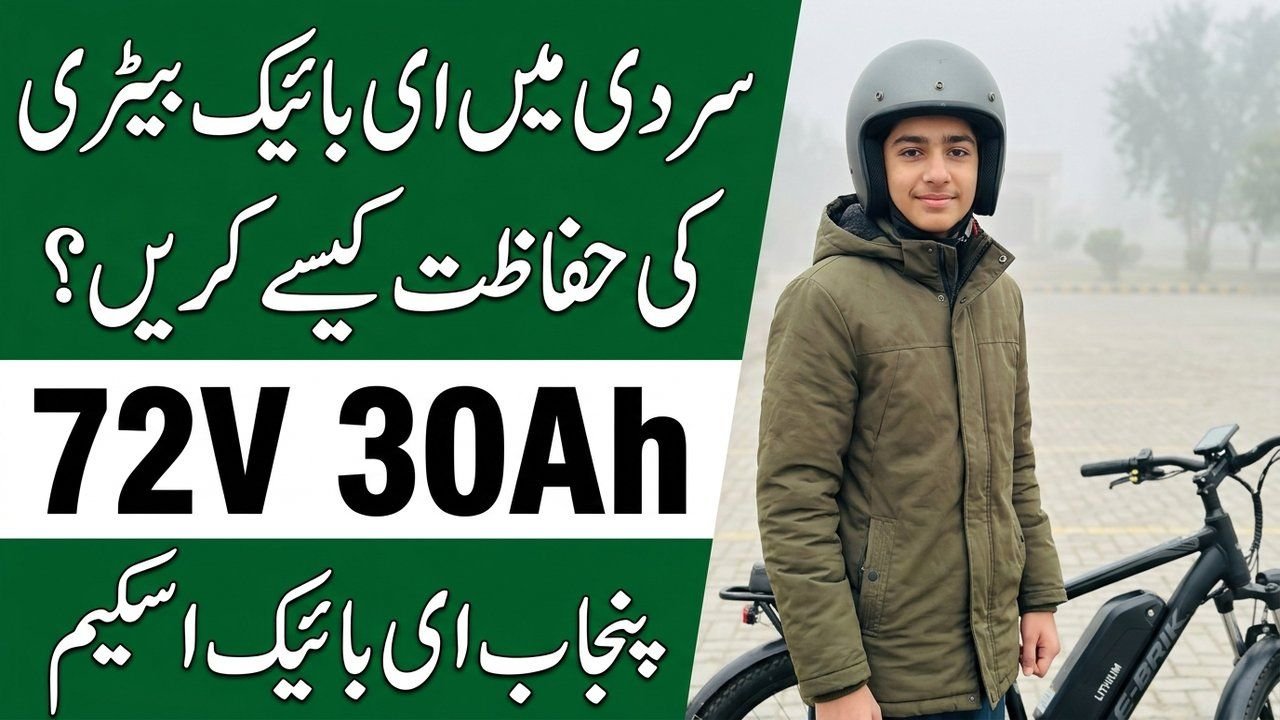
Winter mornings in Punjab feel very different from summer mornings. The air is cold, fog hangs low over the roads, and your hands feel stiff before you start your ride. For students who will soon ride a Punjab e-bike to college every day, this change matters. That is why E-Bike Battery Winter Care is a set of small, simple habits that keep your battery healthy, your range steady, and your daily ride safe.
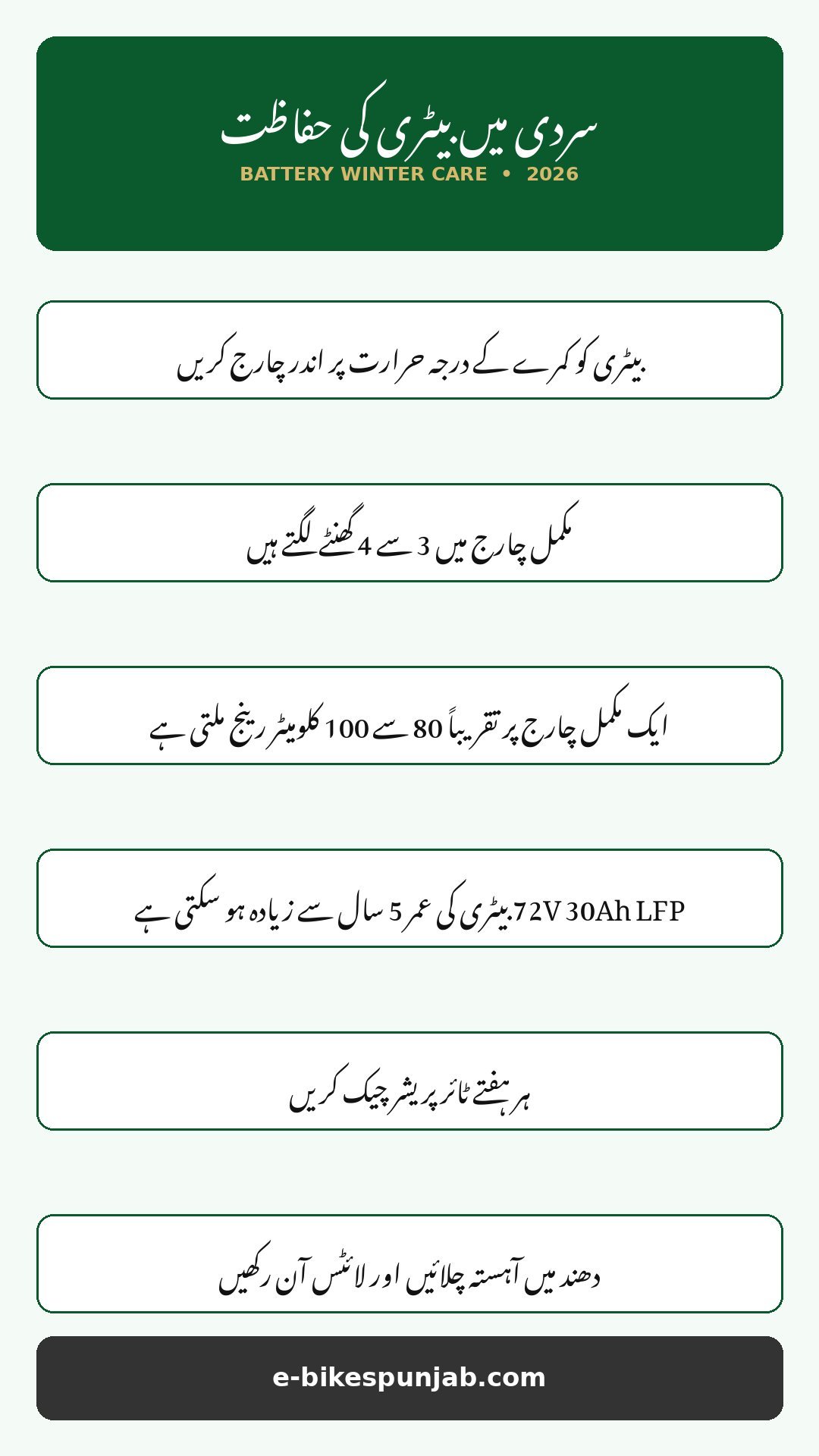
The Punjab e-bike under Phase 2 comes with a 72V 30Ah LFP battery. It stores 2.16 kWh and powers a 1000W motor. On a full charge, it gives a range of about 80 to 100 km. A full charge takes 3 to 4 hours on a standard home socket charger, while a half charge takes about 1.5 to 2 hours. A full charge costs about Rs 30 to 50. With proper care, this LFP battery can last 5 years or more.
Many students will use this bike as their main daily transport. If the charging routine is wrong, the bike may feel slow in the morning and the range may feel shorter than usual. A good winter routine avoids this. Under Phase 2, the total price is Rs 199,000, the government gives a subsidy of Rs 90,000, and the student pays Rs 109,000 over 36 months at Rs 3,028 per month, with 0% markup and no down payment. The government also covers insurance, markup, registration and token tax.
Why Cold Mornings Affect an E-Bike Battery
A battery stores energy through a chemical process, and cold weather can slow that process down. The battery may not give its full energy as quickly on a cold morning as it does on a warm day. The motor may feel less sharp, and the range may feel shorter, even if the battery was fully charged the night before. This does not mean the battery is faulty. It means the battery needs time to warm up and a proper charging routine.
E-Bike Battery Winter Care begins with this point. The battery is at its best when it is charged and stored at room temperature. A battery left outside in cold night air and then charged at once in the early morning is under more stress than a battery kept inside. A slow start and a gentle first few minutes of riding can make a real difference.
Charge Indoors and at Room Temperature
The most important rule of E-Bike Battery Winter Care is simple: charge the battery indoors, or in a covered place where the air is not very cold. If the bike is parked outside at night, move it to a covered area before charging. A battery that has had time to reach room temperature charges in a more normal and healthy way.
Plan charging time in winter. A full charge takes 3 to 4 hours, so start charging early in the evening. If you return home late, let the battery rest for a short time before charging. Use the charger that comes with the bike, and keep the socket dry and safe. A wet socket, a loose plug, or a damaged cable should never be used. Once the charger shows a full charge, remove the plug. For charging time, cost and range in normal conditions, read the detailed charging guide on this site.
Your Daily Winter Charging Routine
A daily routine is easier to follow than a long list of rules. The routine below is simple, fits a normal student day, and needs no extra tools or money. It only needs a little planning.
- Evening return: Park the bike in a covered place, away from rain and fog.
- Short rest: Let the battery rest briefly after the ride before charging.
- Indoor charging: Charge at room temperature with a dry socket and the original charger.
- Full charge: Allow 3 to 4 hours, and remove the plug once full.
- Morning check: Check the charge level before you leave home.
- Gentle start: Ride gently for the first few minutes in the morning.
- Top-up habit: A half charge takes about 1.5 to 2 hours when needed.
This routine works because it is steady. The battery is not shocked by sudden cold charging, it is not left empty for long, and it is not forced to work hard at once on a cold morning. Check the charger cable, plug and socket from time to time. If any part looks burnt, cracked or loose, do not use it. For the basic safety steps every owner should know, read the home charging safety guide on this site.
How to Store Your E-Bike Battery in Winter
Storage is the second pillar of E-Bike Battery Winter Care. Many students do not ride every day in winter. Some days are very foggy, and some days are holidays. A battery left empty for many days can become weak. A battery left fully charged for a very long time without use can also lose health slowly. The best habit is in the middle: keep the battery partly charged, store it in a dry and covered place, and check it from time to time.
If the bike will not be used for a few days, charge the battery to a reasonable level first, then check it after a few days and top it up if needed. Do not leave the bike under open sky in rain or fog for many nights. A clean, dry corner in a garage, a veranda or a covered parking area is a good choice.
- Covered place: Store the bike under a roof, away from rain and fog.
- Dry surface: Keep it on a dry surface, and wipe off water after a ride.
- Part charge: Do not store the battery fully empty for many days.
- Regular check: Check the charge after a few days, and top it up if needed.
- Clean contacts: Keep the charging area clean and dry.
Range in Winter: What to Expect
The normal range is about 80 to 100 km on a full charge. In cold mornings, the usable range can feel lower than this normal figure. The bike may still be healthy, but the cold can make the battery give its energy more slowly. If your daily travel is long, charge fully the night before and avoid starting the day with a half charge. If your travel is short, this change may not matter at all.
Speed also affects range. The bike has a top speed of 50 to 55 km/h, but riding at a steady, moderate speed uses less energy than riding at top speed for a long time. In winter, a steady speed is also safer, because fog and wet roads need more care. Ride smoothly, avoid sudden acceleration, and brake gently. Cold air can also reduce tyre pressure, and low pressure makes the motor work harder, so check tyres every week.
| Winter Habit | What to Do | Why It Helps |
|---|---|---|
| Charge indoors | Charge at room temperature | Healthier charging |
| Full night charge | Allow 3 to 4 hours | Steady morning range |
| Gentle morning start | Ride slowly at first | Battery warms up safely |
| Check tyre pressure | Check every week | Better range and grip |
| Store under cover | Keep bike dry and covered | Protects battery and parts |
The table above gives the main winter habits in one place. None of these steps is difficult. Together, they form a routine that any student can follow without extra cost.
Tyres, Brakes, Lights and Cold Hands
Winter care is not only about the battery. In cold weather, tyre pressure can drop, and a soft tyre can reduce grip and range. Check tyre pressure every week in winter and keep it at the normal level. Also check tyres for cuts, cracks and low tread.
Brakes are the second thing to check. Wet and foggy roads need longer stopping distance, so test the brakes at a slow speed before a ride. If they feel weak or make a noise, get the bike checked before a long ride. Lights are the third thing to check. In fog and low light, the headlight and tail light help other people see the bike, so keep both clean and working.
Cold hands can become stiff and slow to react, which affects braking and control. Gloves help a lot, and a warm jacket helps the rider stay comfortable. The bike comes with a free helmet and a safety rod, and girls also get free driving training. A helmet should be worn on every ride, in every season.
- Tyre pressure: Check every week, and keep tyres at the normal level.
- Brakes: Test at slow speed, and get them checked if weak or noisy.
- Lights: Keep headlight and tail light clean and working.
- Helmet: Wear the free helmet on every ride.
- Warm clothing: Wear gloves and a warm jacket for better control.
Fog Riding and Winter Safety
Fog is the biggest winter road risk in Punjab. On a foggy morning, visibility can drop sharply, and other vehicles may not see a small bike in time. Avoid riding in very dense fog if the ride can be delayed. If it cannot be delayed, ride slowly, keep the lights on, and keep more distance from other vehicles. Do not overtake suddenly, and stay where other drivers can see you.
E-Bike Battery Winter Care and fog safety go together, because both need planning the night before. A student who charges the battery fully, checks the lights and leaves home a little early will not need to rush in fog. Rushing in fog is one of the most dangerous habits on the road. For a full fog guide, read the winter fog riding guide on this site.
What Not to Do in Winter
Good winter care is as much about avoiding mistakes as following good habits. Some mistakes look harmless, but they can slowly harm the battery or make a ride unsafe.
- Do not charge in rain: Never charge in open rain or with a wet socket.
- Do not rush a cold battery: Do not plug in a very cold battery at once.
- Do not leave it empty: Do not leave the battery fully empty for many days.
- Do not use a damaged charger: Do not use a cracked cable or burnt plug.
- Do not ride fast in fog: Do not ride at top speed in dense fog.
- Do not ignore warning signs: Do not ignore a sudden range drop or charging problem.
If any warning sign appears, get help through the official support channels. The helpline is 042-111-333-267 and the support email is support@bikes.punjab.gov.pk. The official portal is the only official source for scheme information, and students should use bikes.punjab.gov.pk for official updates. No other website, agent or social media post should be treated as an official source.
Scheme Reminder for Students
Phase 2 received a very large response. Applications opened on 5 September 2026 and closed on 4 October 2026, with no extension. The scheme covers 100,000 bikes, and registrations reached 1,149,058 by 1 October 2026. Selection is done through PITB computerised e-balloting, and the Bank of Punjab carries out verification after selection.
Balloting has not happened. No official winner list exists. Distribution begins in December 2026, as announced by Chief Minister Maryam Nawaz on 10 November 2026 at the Jhelum ceremony, because the bikes are still being manufactured. No exact December date and no district-wise schedule have been announced. Do not trust any list, date or dealer name shared on social media.
Eligibility is for an HEC-recognised regular student with a Punjab domicile, and a learner permit or driving licence is required. Only one bike is allowed per family, and the bike cannot be sold during the loan period. The bike is black for boys and pink for girls. Each bike comes with a free helmet, a safety rod and 2-day riding training. Girls also get free driving training.
Frequently Asked Questions
Does cold weather reduce the range of an e-bike battery?
Yes, cold mornings can make the usable range feel lower than the normal range of about 80 to 100 km. A full charge the night before and a gentle start in the morning help the bike perform in a more normal way.
Should I charge my e-bike battery indoors in winter?
Yes, charging indoors or in a covered place at room temperature is the best habit in winter. Let a very cold battery reach room temperature first, and charge in a dry place with the original charger.
How long does a full charge take in winter?
A full charge takes 3 to 4 hours on a standard home socket charger, and a half charge takes about 1.5 to 2 hours. Start charging early in the evening, so the battery is full before the morning ride.
How much does a full charge cost?
A full charge costs about Rs 30 to 50. This is very low compared with petrol, and it makes the e-bike a low-cost daily transport option for students.
How should I store the e-bike if I do not ride for a few days?
Store the bike in a dry and covered place, keep a reasonable charge in the battery, and check it after a few days. Do not leave the battery fully empty for many days.
How long will the LFP battery last with proper care?
With proper care, the LFP battery can last 5 years or more. It is known for safety, long life and heat resistance, and a steady charging routine helps protect its life.
Should I check tyre pressure more often in winter?
Yes, check tyre pressure every week in winter. Cold air can reduce pressure, and low pressure can reduce grip and range. A weekly check improves both safety and battery performance.
Is it safe to ride an e-bike in fog?
Avoid riding in very dense fog if the ride can be delayed. If you must ride, go slowly, keep the lights on, and keep more distance from other vehicles. Leave home early, so you do not need to rush.
Conclusion
E-Bike Battery Winter Care is not a technical subject. It is a daily habit: charge indoors at room temperature, allow 3 to 4 hours for a full charge, store the bike in a dry and covered place, check tyre pressure every week, and ride gently in the first few minutes of a cold morning. These steps protect the 72V 30Ah LFP battery and help it last 5 years or more.
Winter in Punjab brings fog, cold hands and low light, but it does not need to bring battery problems. A student who plans charging in the evening, checks the bike in the morning, and rides with care in fog will reach college on time and return home safely. Taking care of the battery in winter is the simplest way to protect this support and enjoy a reliable ride every day.