Night Riding Guide for E-Bike Students: Lights, Visibility and Safe Routes
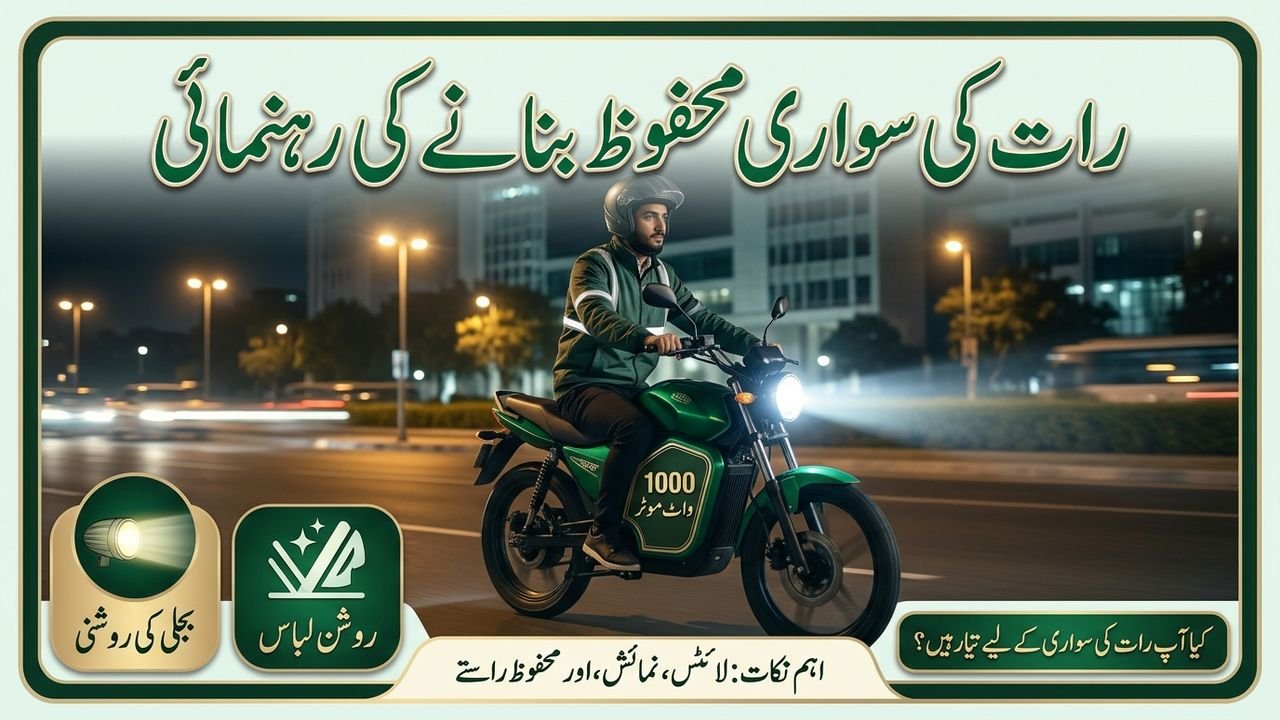
Night riding is different from day riding in every way. Roads look darker, distances are harder to judge, and other drivers may not see you until it is too late. This night riding guide explains how e-bike students can ride safely after dark, with working lights, clear visibility, and a safe route.
The scheme bike has a 1000W motor and a top speed of 50 to 55 km per hour. That speed is safe on a clear day road, but at night the safe speed is lower. Slow down, keep your lights on, and choose roads you know well. A night ride needs more care than a day ride.
Check Your Lights Before Every Night Ride
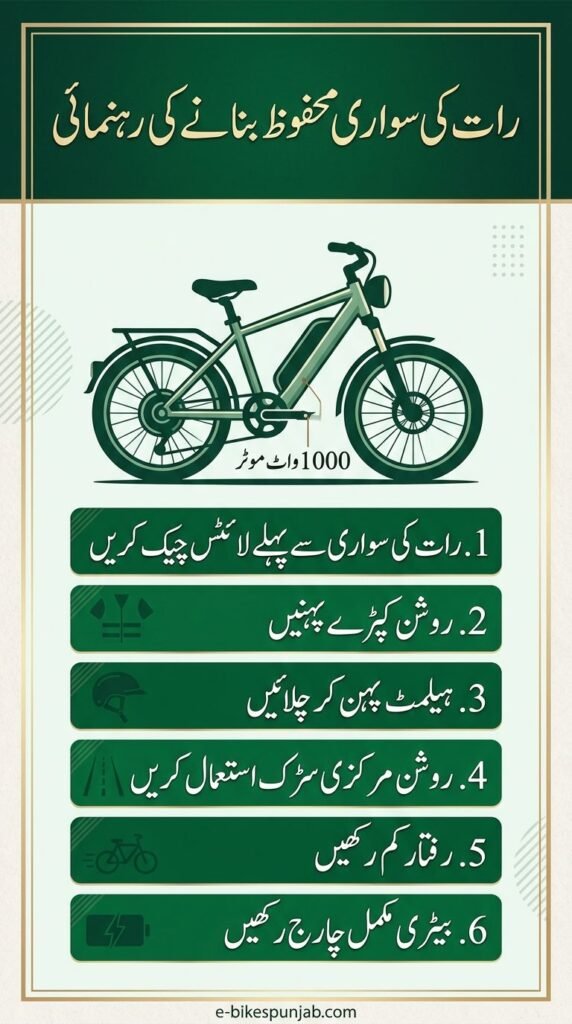
Your lights are your lifeline at night. A dead headlight or a broken tail light makes you invisible to other drivers. Check both lights before you leave, every single night, without exception.
- Headlight Working: switch the headlight on and check that it shines clearly ahead.
- Tail Light Working: check the rear light, so drivers behind you can see you.
- Indicators Working: test both indicators before you leave home.
- Clean the Lenses: wipe dust and dirt off the light lenses for a brighter beam.
Make Yourself Visible to Others
Being able to see is only half the job. Other drivers must also be able to see you. Dark clothes on a dark bike at night are almost invisible. Light and bright colours, plus reflective material, make a real difference.
- Bright Clothing: wear light or bright colours that stand out in headlights.
- Reflective Strips: wear a jacket or bag with reflective strips if you have one.
- Helmet On: wear your helmet on every ride, with the strap fastened.
- Clean Visor: keep your helmet visor clean, so your own view stays clear.
The scheme gives a free helmet with every bike, and the two days of riding training cover safe riding habits. Use what you learned, and never ride at night without your helmet. A fall at night, without a helmet, can cause a serious head injury.
Choose a Safe Night Route
Not every road is safe at night. A road that is fine in the day can be dangerous after dark, with poor lighting, bad surface, or lonely stretches. Plan your night route in daylight, and stick to it.
| Route Choice | Safe at Night | Why It Matters |
|---|---|---|
| Main lit road | Yes, best choice | Good light and traffic |
| Dark shortcut | No, avoid it | No light, hidden dangers |
| Familiar road | Yes, if well lit | You know the turns |
| Lonely stretch | No, avoid it | No help if trouble comes |
- Main Roads First: choose main roads with street lights over dark shortcuts.
- Avoid Lonely Stretches: avoid empty roads where no one can help if you stop.
- Know the Turns: ride only on roads you already know well in daylight.
- Tell Your Family: tell your family your route and expected arrival time.
Ride Slowly and Predict Carefully
At night, everything takes longer: seeing a hazard, reacting to it, and stopping the bike. Your brakes need more distance in the dark, because you see the danger later. Slow down early, keep a bigger gap, and never rush.
- Reduce Speed: ride well below your day speed, especially on turns.
- Keep Distance: leave a bigger gap from the vehicle ahead of you.
- Brake Early: brake gently and early at crossings, turns, and speed breakers.
- Use Your Horn: use your horn early at blind turns and dark crossings.
Watch for pedestrians, animals, and unlit vehicles. A person in dark clothes, a cart without lights, or an animal on the road can appear very late in your headlight beam. Slow down near markets, crossings, and village edges, where people and animals cross without warning.
When Not to Ride at Night
Sometimes the safest choice is not to ride at all. Heavy rain, thick fog, a dead headlight, or feeling tired are all reasons to stay off the bike. No class or errand is worth a night crash.
- Bad Weather: do not ride at night in heavy rain or thick fog.
- Dead Light: do not ride at night if any light is not working.
- Feeling Tired: do not ride if you feel sleepy or unwell after a long day.
- Low Battery: do not start a night ride with a low battery charge.
The scheme bike carries a 72V 30Ah LFP battery. Charge it fully before a night ride, and know your distance, so the charge lasts for the full trip home. A bike that stops on a dark road is a serious problem, so never start a night ride with a low battery.
Check your official scheme status only on the official portal, at bikes.punjab.gov.pk. Riding advice never changes your scheme record, and no one can charge you a fee for safety help.
FAQs
Should I ride my e-bike at night?
Only if your lights work, your battery is charged, and you ride a familiar, well-lit road slowly.
What should I check before a night ride?
Check the headlight, tail light, indicators, brakes, tyres, and battery charge before you leave.
What should I wear at night?
Wear light or bright clothing, a helmet, and reflective strips if you have them.
Is a dark shortcut safe at night?
No. Avoid dark shortcuts and lonely stretches. Use main roads with street lights.
What if my headlight stops working at night?
Stop at a safe, lit place at once and call your family. Do not continue riding in the dark.
Conclusion
Night riding needs lights, visibility, and a safe route. Check your headlight, tail light, and indicators before every night ride. Wear bright clothing, ride slowly, keep a bigger gap, and use main lit roads you already know.
When the weather is bad, a light is dead, or you feel tired, do not ride. A safe wait is always better than a risky night ride, and a careful student always reaches home.