Punjab Schools Outsourcing 5686: Phase 4 Explained for Parents and Students
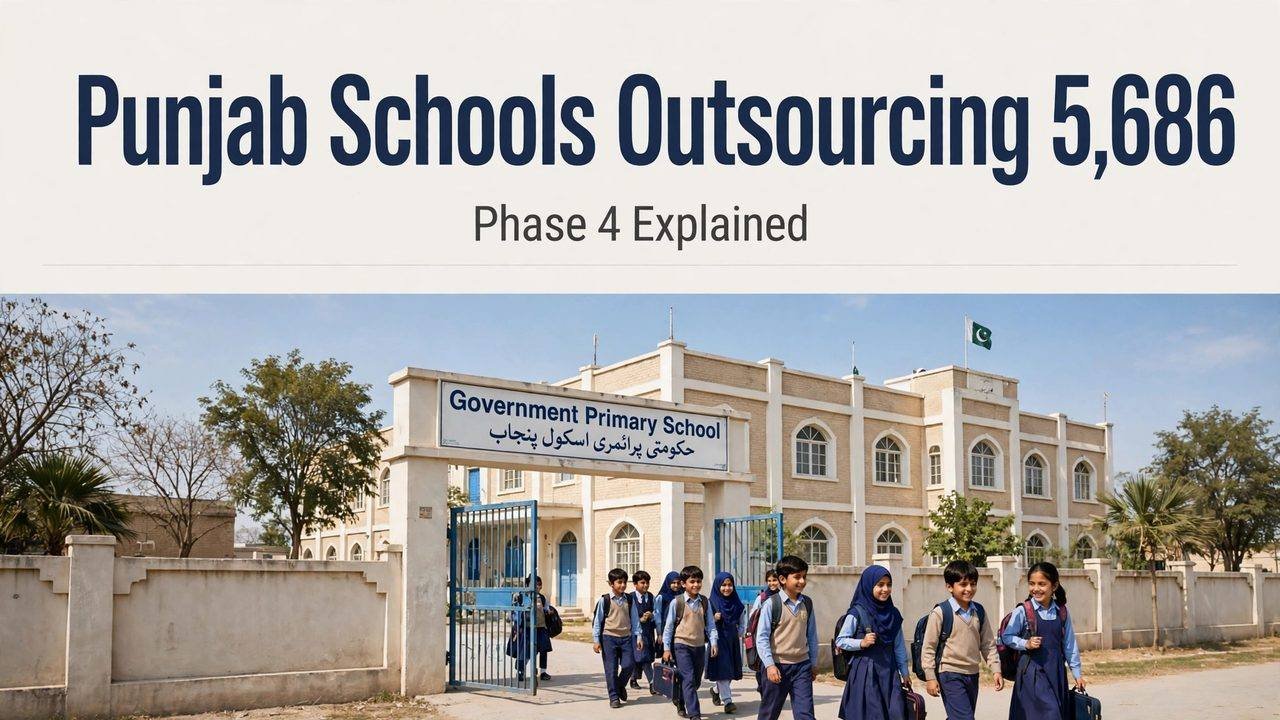
Punjab is getting ready to hand over 5,686 more government schools to private operators. The news matters for lakhs of families, because these are the schools where their children study every day. Punjab Schools Outsourcing 5686 is the latest step in a big plan that started in 2024. This guide explains it in plain words, with only confirmed facts.
Parents want to know one thing first. Will my child’s school change? The school building stays the same, and the school stays a government school. What changes is who runs it day to day. A private operator takes charge of teachers, classes, and results. The government still pays for each child.
More Read: Teachers E-Bike Track Update 2026 – PTF Portal and 5,000 First Phase
Latest Details
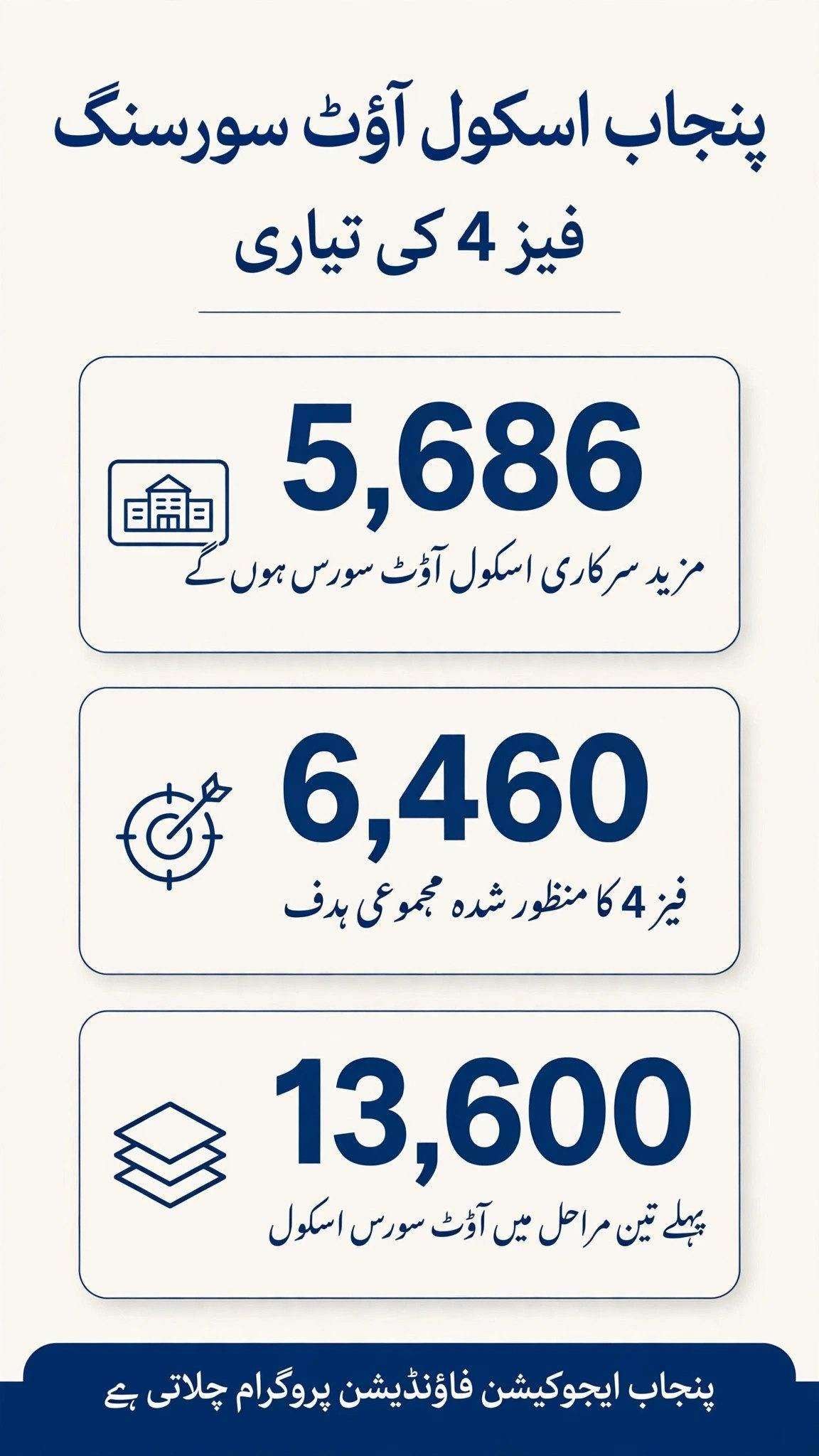
The School Education Department approved Phase 4 of the Public Schools Reorganization Programme (PSRP) in October 2026. The headline figure is 5,686 more schools. The approved Phase 4 total is 6,460 schools. The two figures are explained in the Important Note section below. After this phase, more than 20,000 government schools in Punjab will be run by private operators.
| Detail | Confirmed Fact |
|---|---|
| Programme | Public Schools Reorganization Programme (PSRP), Phase 4 |
| Schools in preparation | 5,686 more government schools |
| Approved Phase 4 total | 6,460 schools (5,860 primary and middle + 600 high) |
| High schools | 600 high schools, included for the first time |
| Already outsourced | 13,600 schools in the first three phases |
| Total after Phase 4 | More than 20,000 schools |
| Government-run schools | Expected to fall from around 38,000 to about 31,500 |
| Small schools | Schools with enrolment of up to 100 students to be closed or merged |
| Admissions | Continued until 31 October 2026; stopped from 1 November 2026 |
| Final school list | Not published yet |
| Programme run by | Punjab Education Foundation (PEF) |
Punjab Schools Outsourcing 5686: What Is PSRP?
PSRP stands for the Public Schools Reorganization Programme. It is the Punjab government’s plan to hand weak government schools to private operators for daily running. The school does not become a private school. It stays a government school.
Here is how it works. The government picks schools that are not doing well. These schools may have very few students, weak results, or poor buildings. A private operator is then chosen to run the school. The operator manages teachers, runs classes, and works to bring children back to school. The government pays the operator about Rs 1,200 per student per month.
The Punjab Education Foundation (PEF) runs the programme under the School Education Department. The Education Minister is Rana Sikandar Hayat, and the Secretary is Khalid Nazir Watto. The programme runs under Chief Minister Maryam Nawaz Sharif.
- What outsourcing means: a private operator manages the school day to day, while the school stays government-owned.
- Who pays: the government pays the operator about Rs 1,200 per student per month.
- Who runs the programme: the Punjab Education Foundation (PEF), under the School Education Department.
- Why it started: many government schools had very low enrolment and weak results.
- What stays the same: the school building, the school name, and its public status.
Which Schools Are Part of Phase 4?
Phase 4 covers 6,460 schools in total, as approved in October 2026. Most of them are primary and middle schools. For the first time, high schools are also part of the plan. This is the biggest change in Phase 4, because the earlier phases covered primary and middle schools only.
- Primary and middle schools: 5,860 schools in Phase 4.
- High schools: 600 schools, both boys’ and girls’ high schools, included for the first time.
- Small schools: schools with enrolment of up to 100 students are to be closed or merged.
- District list: the final list of schools has not been published yet, so no district-wise list is confirmed.
- Reason for high schools: poor infrastructure and falling enrolment, as reported.
Small village schools need care. Schools with up to 100 students face closure or merger, which means children move to a nearby school. Which schools this affects is not confirmed yet. Until the final list is out, parents should not believe any list shared on social media.
What Changes for Children and Parents?
For most children, the school day will look the same at first. They will go to the same building, sit in the same classrooms, and study the same books. The change is behind the scenes. A new operator will manage the teachers and the daily running of the school. Over time, parents may see new teachers and better attendance.
- School building: stays the same; children keep going to the same school.
- Teachers: the operator manages teaching staff, so parents may see new faces in class.
- Fees: no fee change has been confirmed in the reports; the government pays the operator per student.
- Admissions: government schools were told to continue admissions until 31 October 2026 and stop new admissions from 1 November 2026.
- Books and classes: children keep the same syllabus; only the management changes.
- Concerns: teachers’ organisations and parents have opposed the plan and asked for it to be withdrawn.
Parents of children in small schools should pay extra attention. If your child’s school has up to 100 students, it may be closed or merged. Ask the school head what the plan is for your school. Do not rely on rumours. The final list will confirm the position of each school.
Teachers also have questions. If you are a teacher, read our guide on whether school and college teachers can apply for the CM Punjab E-Bike Scheme 2026.
How the First Three Phases Worked
Outsourcing started in 2024, and the first three phases already covered 13,600 schools.
Phase 1 began in 2024 with 5,863 underperforming schools. In seven months, enrolment in those schools jumped by 93 percent, from 228,097 to 440,698 students. The government points to this rise as proof that the plan works. Teachers’ groups have opposed the plan.
- Phase 1 (2024): 5,863 underperforming schools outsourced; enrolment rose 93% in seven months, from 228,097 to 440,698 students.
- Phase 2 (December 2024): 4,700 more schools targeted for outsourcing.
- First three phases (total): 13,600 schools outsourced before Phase 4 began.
- Per-student payment: about Rs 1,200 per month paid to operators for each student.
Our CM Punjab E-Bike Scheme 2026 latest update explains the current status of the bike scheme for students.
Phase 4 vs Earlier Phases
Phase 4 is different from the earlier rounds in one clear way. It is the first phase to include high schools. The earlier phases covered primary and middle schools only. Phase 4 also pushes the total past 20,000 schools.
| Phase | Schools | What Was New |
|---|---|---|
| Phase 1 (2024) | 5,863 | First round; underperforming schools; enrolment up 93% in seven months |
| Phase 2 (Dec 2024) | 4,700 targeted | Second round; more primary and middle schools added |
| First three phases | 13,600 total | Primary and middle schools only |
| Phase 4 (Oct 2026) | 6,460 approved; 5,686 in preparation | 600 high schools included for the first time; total past 20,000 |
In 2024, the plan started with under 6,000 schools. By the end of Phase 4, the number will be above 20,000, and government-run schools are expected to fall from around 38,000 to about 31,500.
What Happens Next?
Phase 4 was approved in October 2026, but the work is not finished. The final list of schools and the operator-selection process were still being finalised. Applications from interested operators were expected in October and November 2026.
- Final school list: still being finalised; not published yet.
- Operator applications: expected in October and November 2026.
- Operator selection: process still being finalised when Phase 4 was approved.
- Official updates: parents should check the Punjab Education Foundation website at pef.edu.pk for official news.
Parents should watch for three things: the final list of schools, the names of the operators picked for each area, and any new orders from the department about admissions, mergers, or school timings.
Important Note
Two figures are in the news, and parents should know what each one means. The figure 5,686 is the latest reported preparation figure for this round. The approved Phase 4 total, reported in October 2026, is 6,460 schools: 5,860 primary and middle schools plus 600 high schools. The final school list has not been published yet, so the exact list of schools is not confirmed.
- 5,686 figure: the latest reported preparation figure for this round.
- 6,460 figure: the approved Phase 4 total reported in October 2026 (5,860 primary and middle + 600 high).
- Final school list: not published yet; no district-wise list is confirmed.
- Operator selection: process was still being finalised when Phase 4 was approved.
- Official notification: no official Phase 4 notification URL has been published.
Do not trust any school list shared on social media. Only the department’s final list and official PEF updates count.
Conclusion
Punjab is preparing a big change for its government schools. Phase 4 will bring 5,686 more schools under private management, with high schools joining for the first time. Parents should watch for the final school list and trust only official updates. The school stays public, but who runs it will change.
FAQs
1. What is Punjab Schools Outsourcing 5686?
It is the latest round of Punjab’s plan to hand 5,686 more government schools to private operators. The schools stay government schools; only daily management moves to an operator under the Public Schools Reorganization Programme (PSRP).
2. How many schools are in Phase 4?
The latest reported preparation figure is 5,686 schools. The approved Phase 4 total, reported in October 2026, is 6,460 schools: 5,860 primary and middle plus 600 high.
3. Are high schools part of Phase 4?
Yes. For the first time, 600 high schools are included, both boys’ and girls’ high schools. Earlier phases covered primary and middle schools only.
4. Will my child’s school close?
Most schools will not close; they will keep running under a new operator. But schools with enrolment of up to 100 students are to be closed or merged. The final list will confirm which ones.
5. Will parents have to pay fees after outsourcing?
No fee change has been confirmed. The government pays the operator about Rs 1,200 per student per month. Parents should not pay any new fee without a written order from the school or department.
6. What is PSRP?
PSRP is the Public Schools Reorganization Programme: the Punjab government’s plan to give weak government schools to private operators for daily management. The Punjab Education Foundation (PEF) runs it.
7. Who runs the outsourced schools?
Private operators run the schools day to day, managing teachers, classes, and results. The Punjab Education Foundation picks the operators and checks their work.
8. When will the final list of schools come out?
That is not confirmed yet. The final list was still being prepared when Phase 4 was approved in October 2026. Check the Punjab Education Foundation website and your school head for updates.
9. Why is Punjab outsourcing government schools?
The government says many schools had low enrolment, weak results, and poor buildings. In Phase 1, enrolment rose 93% in seven months, from 228,097 to 440,698 students. Teachers’ groups have opposed the plan.
10. Where can parents check official updates?
Check the Punjab Education Foundation website and ask your child’s school head. Only the department’s final list and official PEF updates count.
Official and Trusted Source Table
| Source | Verified Information | Link |
|---|---|---|
| Punjab Education Foundation (Official) | Official body that runs the PSRP outsourcing programme | pef.edu.pk |
| The Express Tribune (27 Oct 2026) | Phase 4 approved; 6,460 schools (5,860 primary and middle + 600 high); 13,600 already outsourced; admissions till 31 Oct 2026 | tribune.com.pk |
| ProPakistani (27 Oct 2026) | Phase 4 approved; 6,460 schools; 600 high schools first time; schools up to 100 enrolment to close | propakistani.pk |
| The Nation (30 Oct 2026) | Phase 4 started; 6,460 schools; government-run schools to fall from around 38,000 to about 31,500 | nation.com.pk |