Female Students College Route Safety Guide 2026: E-Bike Safety

For female students, a college route must be safe before it is short. A quiet shortcut through a dark or lonely place is never worth the minutes it saves.
Latest Details
Latest update — 21 November 2026: Phase 2 registration for the CM Punjab E-Bike Scheme closed on 4 October 2026, and no new application window has been announced. Distribution of the 100,000 Phase 2 bikes will begin in December 2026 — Chief Minister Maryam Nawaz Sharif announced the revised schedule on 10 November 2026 in Jhelum, after the earlier 5 November date passed without distribution starting. No exact December date has been announced yet.
Female students applied in remarkable numbers — 314,445 of the 607,399 completed Phase 2 applications came from women. Selected girls will also receive free driving training, along with a free helmet and safety rod and two days of riding training. Check your own selection status only on your dashboard at bikes.punjab.gov.pk — no official winner list has been published.
This guide is for daily college travel on a scheme e-bike, including the pink bike for girls. It does not change your loan, training, or scheme terms.
Choose Your Route By Safety First
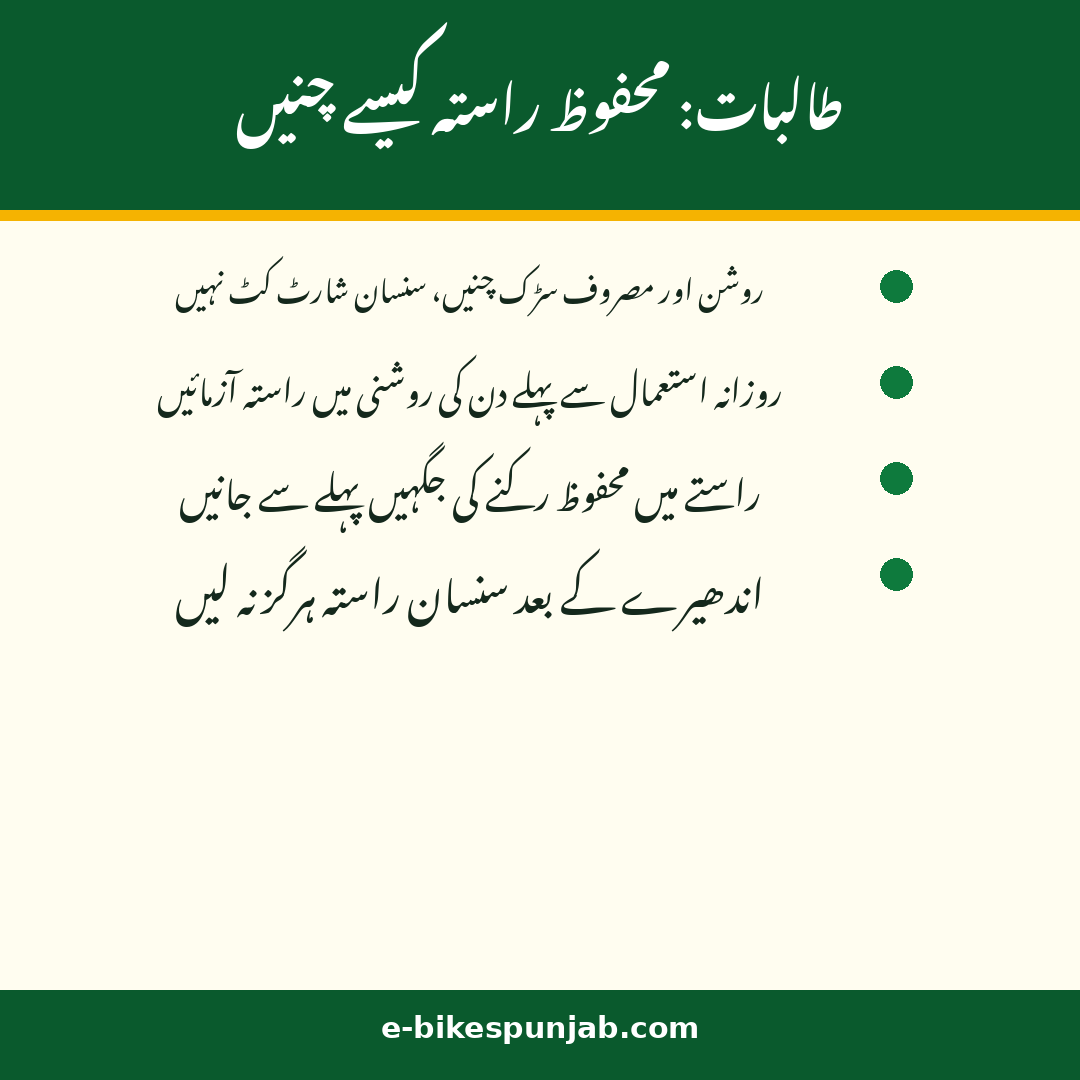
Pick the route you will use every day, and test it in daylight before you rely on it.
- Busy Roads First: prefer busy, lit roads over lonely shortcuts, even if longer.
- Daylight Test: trial the route in daylight, at a quiet time, before daily use.
- Safe Stops: know safe stopping places along the route, such as shops or colleges.
- No Dark Shortcuts: never use a dark, unlit shortcut, especially after sunset.
Before Every Ride: Quick Safety Check
A two-minute check before leaving protects the whole journey.
| Check | What To Do |
|---|---|
| Helmet | Strap fastened |
| Battery | Level and reserve |
| Brakes | Firm and even |
| Phone | Charged, reachable |
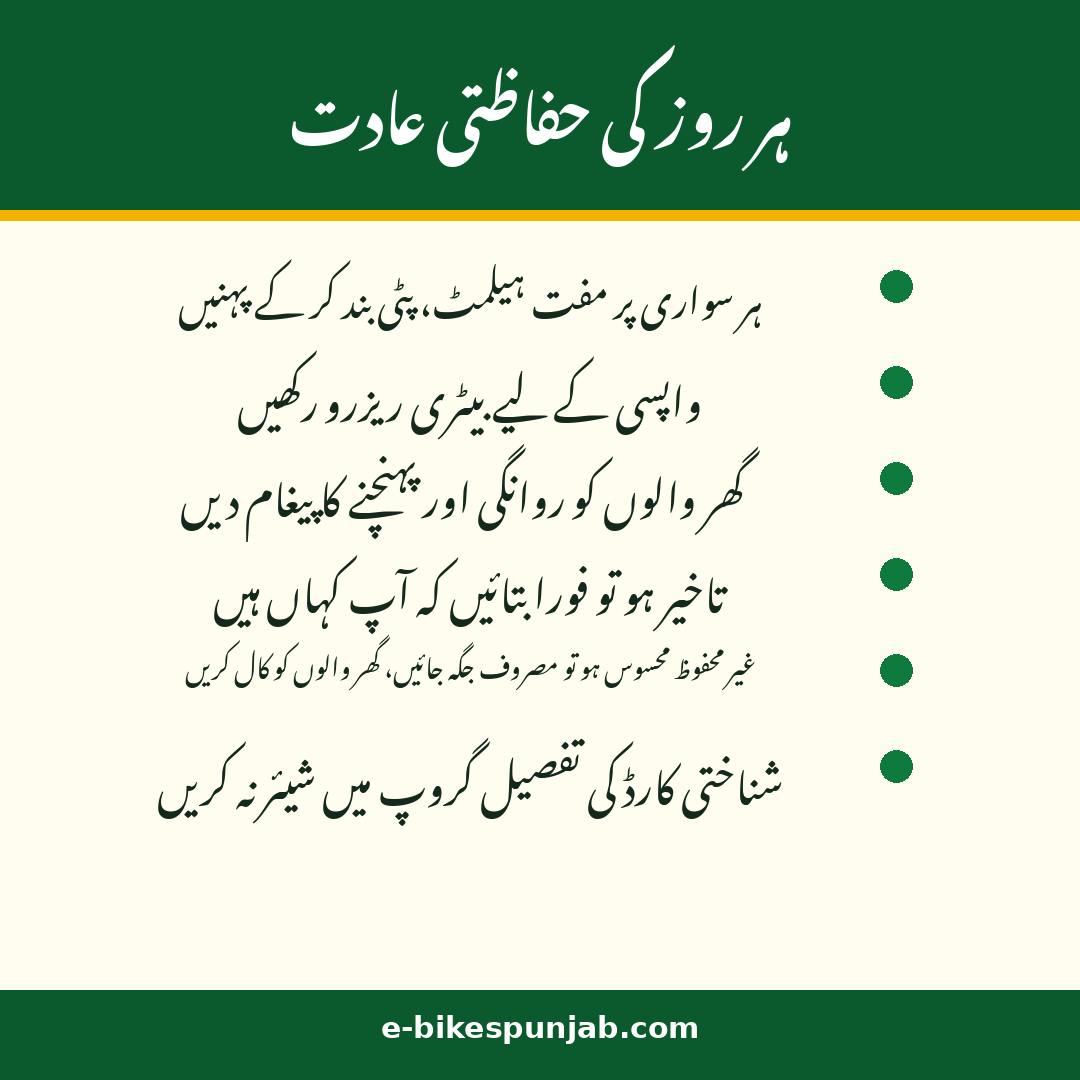
- Helmet On: wear your free helmet on every ride, with the strap fastened.
- Battery Reserve: leave battery reserve for the return trip, every day.
- Phone Charged: keep your phone charged, and tell family your route.
- Bag Secure: keep your bag closed and secure, with nothing loose.
Tell Someone Your Plan Every Day
Someone at home should always know where you are going, and when you should arrive.
- Daily Message: tell a parent or guardian when you leave, and when you arrive.
- Route Shared: share your usual route with family, before you need help.
- Delay Message: if delayed, message family at once, and say where you are.
- Trusted Contact: keep one trusted contact reachable, apart from family if needed.
Riding Safely In Traffic
Traffic safety for girls is the same as for all riders, with extra care about stopping places.
- Steady Speed: ride at a steady, controlled speed, well below the top speed.
- Clear Gap: keep a clear gap from cars, rickshaws, and other bikes.
- No Racing: never race, and never follow a stranger’s bike or vehicle.
- Safe Stops Only: stop only in busy, visible places, never in a lonely spot.
If You Feel Unsafe On The Road
If you feel unsafe, trust that feeling. Stopping safely is always the right choice.
- Move To Safety: move to a busy shop, college gate, or public place.
- Call Family: call a parent, guardian, or trusted contact at once.
- Do Not Argue: do not argue with a stranger on the road, and do not follow anyone.
- Note Details: note time, place, and vehicle details, if it is safe to do so.
Parking And Returning Home Safely
The journey is not over until the bike is parked safely and you are home.
- College Parking: park in a safe, visible college place, locked every time.
- Home Parking: park at home in a lit, approved place, locked every time.
- Evening Rule: in winter or after sunset, prefer the busiest, best-lit route home.
- Charging Plan: charge only in a safe, dry, approved place, never in a lonely spot.
Training deserves special attention for female students. The scheme offers two days of free riding training, and girls who cannot ride yet should attend both days in full. Practise first in a quiet, open place, with a family member nearby if possible, and do not start daily college travel until braking, turning, and stopping feel natural. A confident rider is a safer rider, and confidence comes from slow, repeated practice, not from a first-day rush into traffic.
Clothing and helmet fit also matter on a daily route. Wear clothing that does not catch in a wheel, and keep your helmet snug, level, and strapped under the chin, with a clean visor. If your helmet is cracked, loose, or damaged, do not use it; report it through the proper channel and get advice before riding. A helmet that fits badly is almost as risky as no helmet at all, especially on a busy road.
Finally, talk about safety at home, openly and without shame. Agree with your family on a daily message routine, a latest return time, and what to do if you are delayed. Keep your CNIC and application details private, and never share them in a group or with a stranger offering help on the road. A family that has agreed the plan in advance will act calmly, and a student who knows the plan will ride with far more confidence.
- Training First: attend both training days in full, and practise in a quiet place first.
- Helmet Fit: snug, level, strapped, visor clean, and no damaged helmet in use.
- Family Agreement: daily message, latest return time, and a delay plan agreed in advance.
- Privacy Rule: never share CNIC or application details in a group or with a stranger.
FAQs
Should I take a shortcut through a lonely area?
No, prefer busy, lit roads, even if the shortcut is shorter.
Should I tell family my route every day?
Yes, tell a parent or guardian when you leave, when you arrive, and if you are delayed.
What if I feel unsafe on the road?
Move to a busy, public place, call family or a trusted contact, and do not argue with a stranger.
Do I get a helmet with the bike?
Yes, a free helmet and safety rod come with the bike, plus two days of riding training.
Where do I confirm scheme updates?
Confirm updates only on the official portal, and keep personal details private.
Conclusion
A safe college route is chosen by light, traffic, and safe stops, not by speed. Test it in daylight, tell family daily, and never use a dark shortcut.
Wear your helmet, attend both training days, park in visible places, and keep your details private. That routine protects every journey, not just the first one.