E-Bike Helmet Rules and Fines in Punjab: Rider, Pillion and Challan Guide
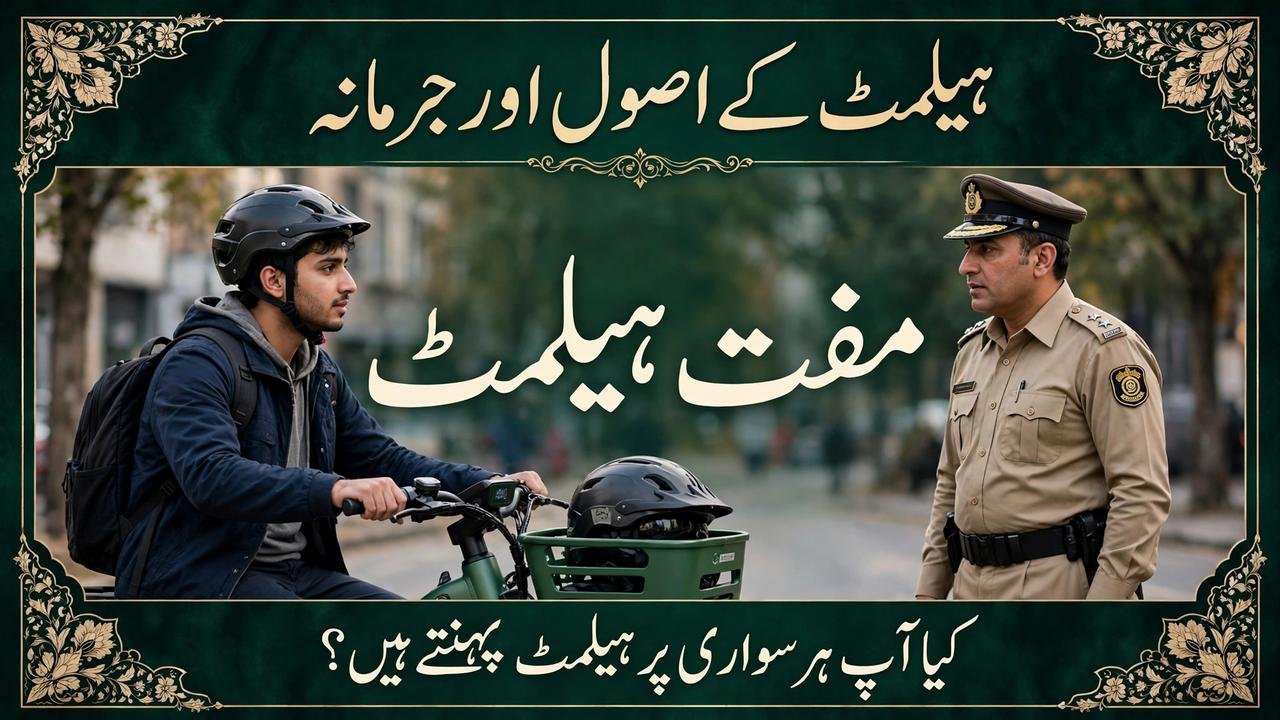
Helmet rules begin with one simple fact: a helmet is the most important part of riding your scheme e-bike. The scheme gives every selected student a free helmet with the bike, along with a safety rod and two days of riding training. That free helmet is not a gift to keep in a cupboard. It is the first thing you should wear before every ride, on every road, in every season.
Punjab traffic rules require riders to wear a helmet, and the same duty applies to students on a scheme e-bike. A fall without a helmet can cause a serious head injury, even at a slow speed and on a short trip. This helmet rules guide explains who must wear a helmet, what counts as a proper helmet, and what happens when the rules are broken.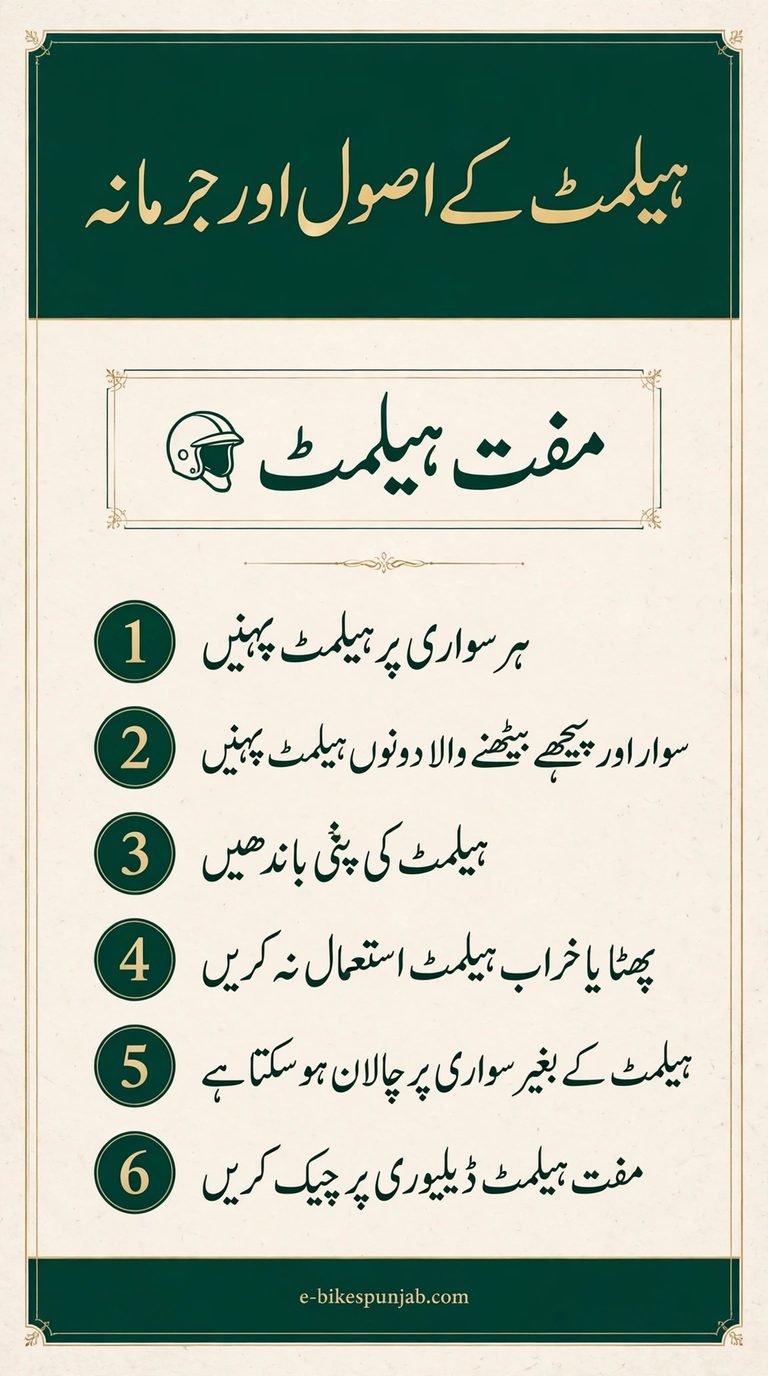
Why a Helmet Matters on Every Ride
Many students think a helmet is only for fast roads or long trips. That idea is wrong. Most falls happen close to home, on familiar roads, at normal speed. A helmet protects your head in the one moment you cannot predict, and that protection is worth far more than the few seconds it takes to put it on.
- Head Protection: a helmet absorbs the shock of a fall and protects your brain.
- Legal Duty: Punjab traffic rules require a helmet, and police can stop riders without one.
- Family Peace: your parents worry less when they know you always wear a helmet.
- Training Habit: the two days of free riding training teach safe habits, starting with the helmet.
Who Must Wear a Helmet
The rider must always wear a helmet. The pillion passenger must wear one too. A student who rides without a helmet breaks the rules and risks both a challan and a serious injury. There is no short trip that is safe without a helmet, and no excuse that removes the risk.
- Rider Always: the rider wears a helmet on every trip, short or long.
- Pillion Too: a passenger on the back seat also needs a helmet.
- Strap Fastened: a loose helmet can fly off in a fall, so fasten the strap.
- Child Never Pillion: children must never ride as pillion passengers on the bike.
What Counts as a Proper Helmet
Not every helmet protects you. A cracked, loose, or damaged helmet gives little protection. Check your free scheme helmet before your first ride, and check it again every month, because a helmet that looks fine can hide a weak strap or a cracked shell.
| Helmet Check | What to Look For | If It Fails |
|---|---|---|
| Fit | Firm, snug, no wobble | Ask for the right size |
| Shell | No cracks or dents | Do not use it |
| Strap | Clicks shut and holds | Get the strap fixed |
| Visor | Clear, no deep scratches | Clean or replace it |
- Try It On: wear the helmet and shake your head gently to test the fit.
- Check Monthly: look for cracks, loose padding, and a weak strap every month.
- Keep It Clean: wipe the visor and shell with a soft cloth, not harsh cleaners.
- Replace Damage: a helmet that took a hard hit should be replaced, not reused.
Helmet Rules and Challan: What Students Should Know
Breaking helmet rules can bring a traffic challan. The fine for riding without a helmet is set by the Punjab traffic authorities, and the amount can change. This article does not state any fine amount, because the current figure must be checked on the official traffic-police notice. What matters is the rule itself: no helmet means a challan, and a challan means a record against your name.
- Fine Applies: riding without a helmet can bring a challan under Punjab traffic rules.
- Check Official Notice: confirm the current fine only on the official traffic-police notice.
- Pay Officially: pay any challan only through the official channel printed on it.
- No Agent Fee: no agent can cancel a challan for money, so ignore such offers.
Your Free Helmet With the Scheme Bike
Every scheme bike comes with a free helmet, a safety rod, and two days of riding training. The helmet is part of your package, so check it at delivery. Try it on at the dealer, and ask for the right size before you sign the delivery papers.
- Check at Delivery: try the helmet on and check the size before signing.
- Safety Rod Fitted: confirm the safety rod is fitted firmly on the bike.
- Training Dates: ask when your two days of free riding training will start.
- Keep It Safe: store the helmet in a dry place, not on a hot bike seat.
Check your official scheme status only on the official portal, at bikes.punjab.gov.pk. Helmet rules come from Punjab traffic law, and scheme news comes only from the official portal.
FAQs
Must I wear a helmet on every ride?
Yes. Wear your helmet on every ride, even a short trip to college.
Does the passenger need a helmet too?
Yes. A pillion passenger must wear a helmet, with the strap fastened.
What if my free helmet does not fit?
Try it at delivery and ask the dealer for the right size before signing.
Can I be fined for riding without a helmet?
Yes. A challan can apply under Punjab traffic rules; check the official traffic-police notice for the current fine.
Where do I check my scheme status?
Check live status only on the official portal, bikes.punjab.gov.pk.
Conclusion
Helmet rules are simple: wear a proper helmet, fasten the strap, and make sure your passenger does the same. A good helmet protects your head, keeps you within the law, and keeps your family free from worry.
Never ride without a helmet, even for one minute. A careful student reaches college safely, and a safe student always comes home.