E-Bike Tyre Puncture Guide 2026: What Students Should Do Step by Step
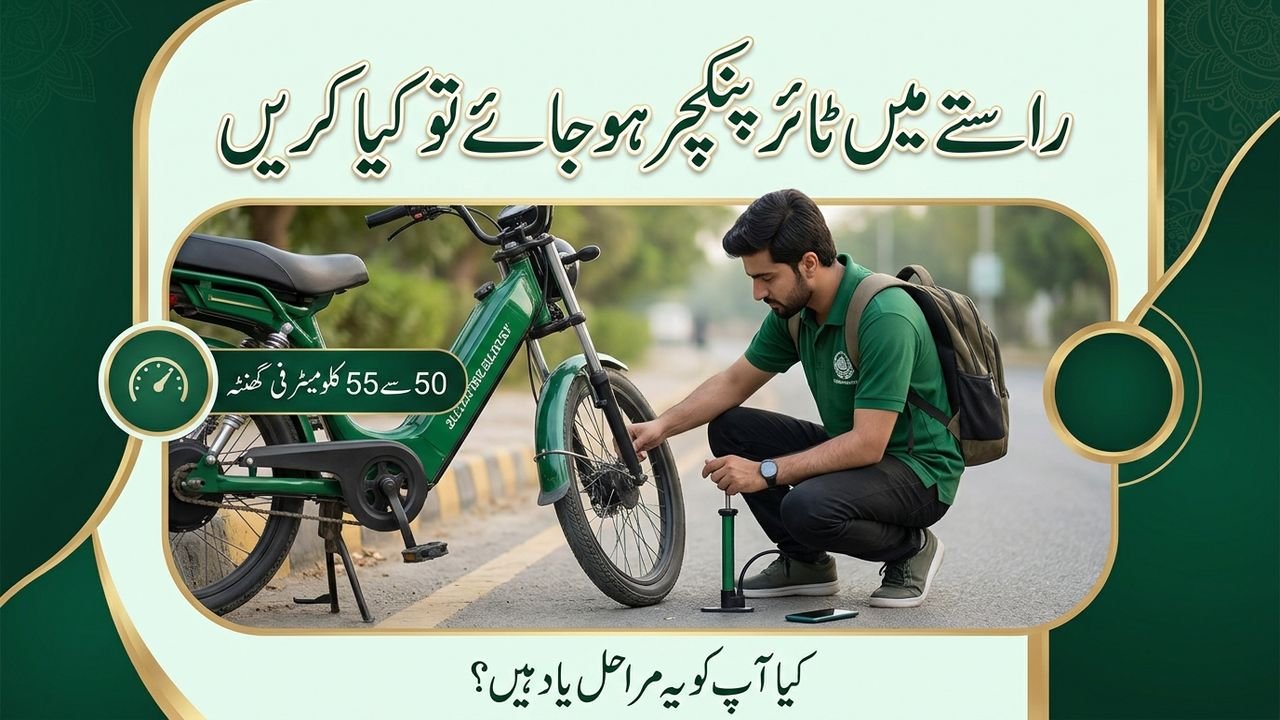
A flat tyre can happen to any rider, on any road, at any time. This tyre puncture guide explains what students should do when their scheme e-bike gets a puncture on the road, step by step, so a small problem never becomes a dangerous one.
Latest Details
Latest update — 22 November 2026: Phase 2 registration for the CM Punjab E-Bike Scheme closed on 4 October 2026, and no new application window has been announced. Distribution of the 100,000 Phase 2 bikes will begin in December 2026 — Chief Minister Maryam Nawaz Sharif announced the revised schedule on 10 November 2026 in Jhelum, after the earlier 5 November date passed without distribution starting. No exact December date has been announced yet.
The balloting result is still awaited as of 22 November 2026, and no official winner list has been published, so check your own status only on your dashboard at bikes.punjab.gov.pk. While you wait, keep the arrangements in this guide ready — charging point, parking place and papers — because no district-wise delivery schedule has been announced yet.
The scheme bike has a 1000W motor and a top speed of 50 to 55 km per hour. At that speed, a sudden flat tyre can pull the bike to one side. The first seconds after a puncture matter most, so learn the steps now, before you ever need them.
Stay Calm and Stop Safely
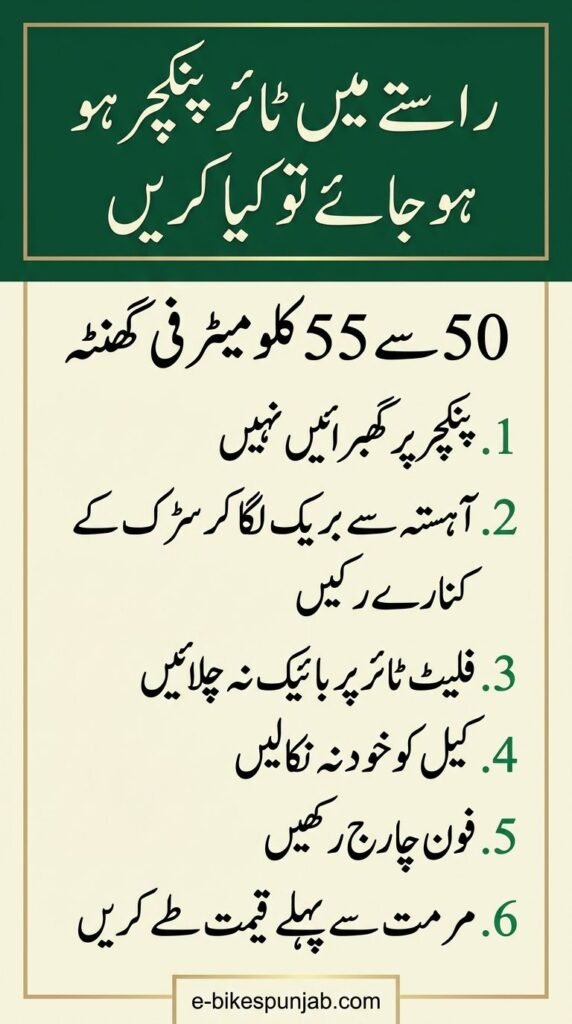
The first sign of a puncture is a change in the ride. The bike may feel heavy on one side, the steering may wobble, or you may hear a hissing sound. Do not panic, and do not brake hard. A hard brake on a flat tyre can throw the bike over.
- Ease Off the Power: release the throttle slowly and let the bike slow down.
- Brake Gently: press both brakes softly, with more pressure on the good tyre.
- Move to the Side: guide the bike to the edge of the road, away from traffic.
- Stop Fully: stop the bike, switch it off, and step away from moving traffic.
Never try to ride on a flat tyre to reach home. Stop as soon as it is safe, even if home is near.
Check the Tyre and Find the Cause
Once you are safe, look at the tyre closely. Check both tyres, because the flat one is not always the one you expect. Look for a nail, a screw, a piece of glass, or a sharp stone stuck in the rubber.
- Look Carefully: walk around the bike and check both tyres from all sides.
- Feel the Air: press the tyre to feel how soft it is, and listen for a leak.
- Find the Object: look for a nail or sharp object, but do not pull it out yet.
- Check the Valve: check that the valve cap is on and the valve is not damaged.
What to Carry for a Puncture
A small kit in your bag turns a long wait into a short delay. You do not need to be a mechanic. You only need the basics, and the phone number of someone who can help.
| Kit Item | Why You Need It | Keep It Where |
|---|---|---|
| Charged phone | Call family or a repair shop | Your pocket or bag |
| Small pump | Temporary air for a slow leak | Under the seat or bag |
| Family number | Help if you are stuck | Saved in your phone |
| Rain cover | Wait safely in bad weather | Your bag |
- Phone Charged: charge your phone fully before every ride, in case you need help.
- Know a Repair Shop: note the repair shops on your daily route before you need one.
- Keep Cash Ready: keep a small amount of cash for a roadside repair.
- Tell Your Family: tell your family your route and expected time each day.
Get the Repair Done Properly
At the repair shop, explain the problem clearly and ask what will be done. A proper repair fixes the tube or the tyre, checks the wheel, and tests the air pressure. Watch the work if you can, and ask questions about anything you do not understand.
- Ask the Cause: ask what caused the puncture, so you can avoid it next time.
- Check the Repair: check that the tyre holds air before you pay and leave.
- Ask the Price First: agree the repair cost before the work starts, not after.
- Keep the Receipt: keep the receipt, in case the repair fails the same day.
Prevent the Next Puncture
Most punctures can be prevented with simple habits. Check your tyres before every ride, avoid broken roads, and keep the air pressure correct. A healthy tyre resists sharp objects far better than a soft, worn one.
- Daily Tyre Check: look at both tyres before every ride, and press them for air.
- Avoid Broken Roads: avoid roads with glass, nails, and sharp stones where possible.
- Correct Pressure: keep the tyres at the pressure the dealer told you.
- Replace Worn Tyres: replace a tyre that is cracked, smooth, or badly worn.
Students should also learn their route. Note which streets have broken glass or construction waste, and choose a cleaner road when you can. A five-minute longer route on a clean road is better than a fast route that punctures your tyre.
Check your official scheme status only on the official portal, at bikes.punjab.gov.pk. No one can charge you a fee for puncture advice, and no agent can change your scheme record.
FAQs
What should I do first when my tyre punctures?
Ease off the power, brake gently, move to the side of the road, and stop safely away from traffic.
Can I ride on a flat tyre to reach home?
No. Riding on a flat tyre damages the wheel and can cause a fall. Stop and push the bike instead.
Should I pull a nail out of the tyre?
No. Leave it in place, because it may be blocking the hole. Let the repair worker remove it.
What should I carry for a puncture?
A charged phone, a small pump, a family number, and a little cash for a roadside repair.
How can I prevent punctures?
Check tyres daily, keep correct air pressure, avoid broken roads, and replace worn tyres.
Conclusion
A puncture is a normal part of riding, and a calm student handles it well. Slow down gently, stop safely, check the tyre, and get a proper repair. Never ride on a flat tyre, and never pull a nail out on the road.
Carry a charged phone, know the repair shops on your route, and check your tyres before every ride. Those small habits turn a roadside problem into a short delay, not a dangerous day.