E-Bike Motorway Rules Pakistan 2026: Why Scheme E-Bikes Cannot Use Motorways
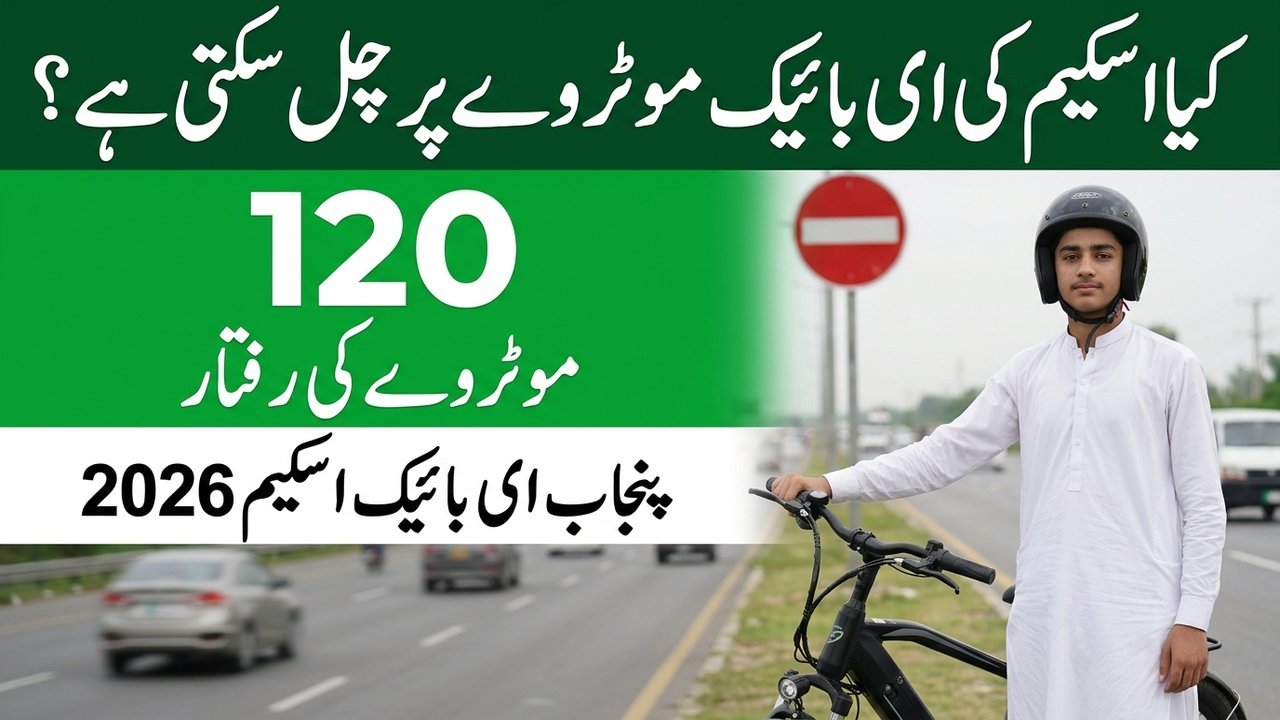
Many students who applied for the Punjab e-bike scheme are asking a simple question: can the new scheme e-bike be used on a motorway? The short answer is no. E-Bike Motorway Rules Pakistan are clear on this point. Motorcycles are not allowed on any motorway in Pakistan, and that rule covers electric bikes as well. A scheme e-bike is a motorcycle in the eyes of the law, so it cannot enter a motorway, whether the rider is a student, a teacher, or anyone else.
This matters because thousands of students travel between cities every week, and the motorway looks like the fastest and safest route — but it is closed to two-wheelers. Understanding the E-Bike Motorway Rules Pakistan before the bikes arrive in December 2026 will save students from a wasted trip, a turn-back at the toll plaza, and possibly a challan.
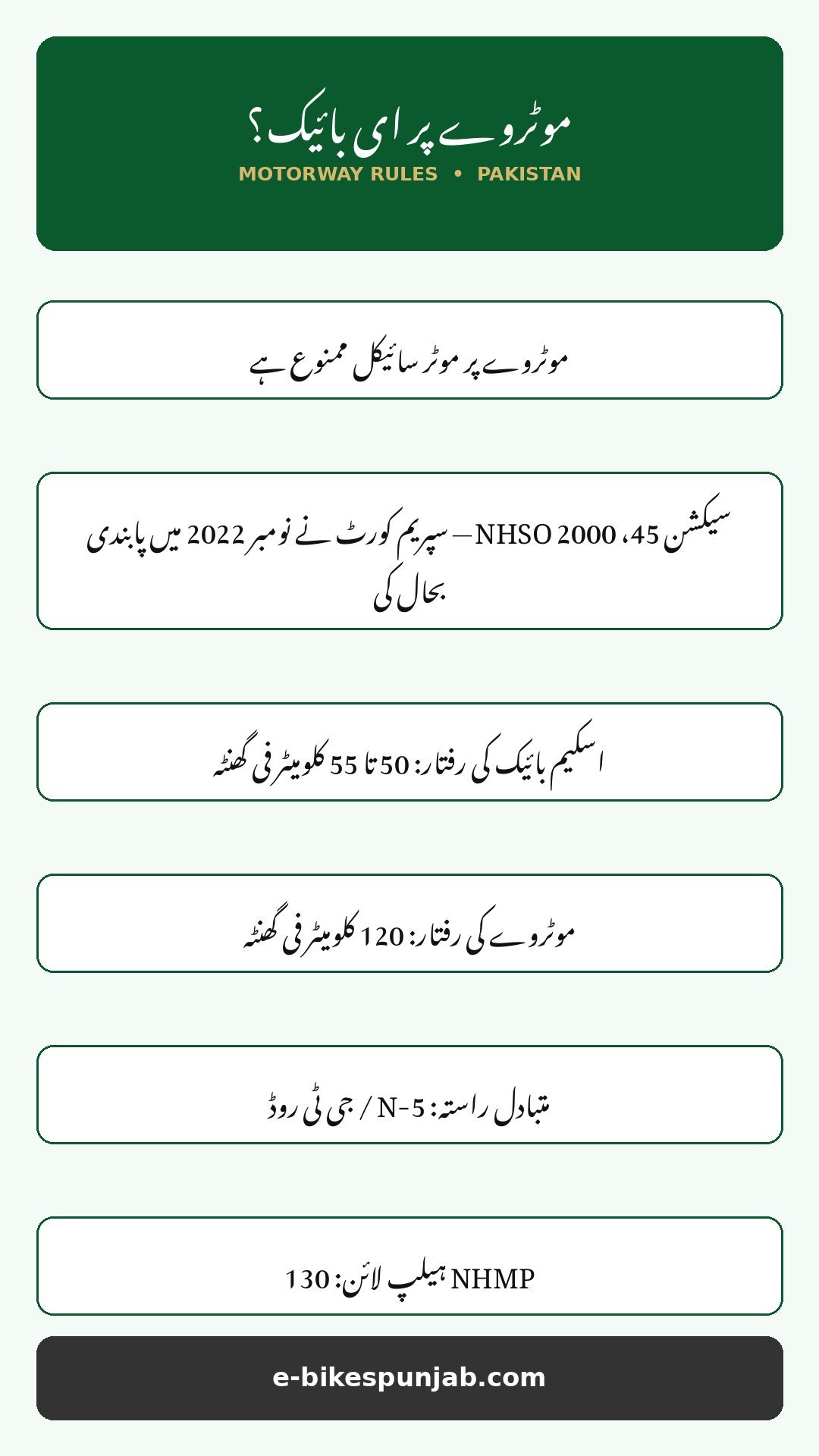
The good news is that there are safe alternatives. National highways like the N-5, commonly known as the GT Road, run parallel to most motorways and are open to motorcycles. This article explains the law, the reasons behind it, and the alternatives every scheme applicant should know before riding on a highway.
Why Motorways Are Closed to Motorcycles
A motorway is built for high-speed, long-distance travel. Cars, buses, and trucks move at 120 km/h, and the road has no crossings, no slow traffic, and no pedestrians. A motorcycle, even a new electric one, does not fit into that traffic flow. The speed difference alone creates danger. A bike travelling at 50 km/h among cars moving at 120 km/h becomes a slow obstacle that faster vehicles must suddenly avoid.
The E-Bike Motorway Rules Pakistan exist to protect riders from this danger. On a motorway, a small mistake at high speed can be fatal, and a motorcycle offers no metal body around the rider. A car has airbags, seat belts, and a steel frame. A motorcycle rider has only a helmet and protective clothing. That is why the ban applies to all motorcycles, petrol or electric, big or small.
Another reason is the design of the motorway itself. Motorways have no service lanes for slow vehicles, no roadside shops, and long stretches without exits. If a bike breaks down, the rider is stranded on a high-speed road with nowhere safe to stop.
The Law Behind the Ban: Section 45 and the Supreme Court Decision
The ban on motorcycles on motorways comes from Section 45 of the National Highway Safety Ordinance 2000, often shortened to NHSO 2000. This law gives the authorities the power to restrict certain types of vehicles from motorways. Under this section, motorcycles have been kept off motorways since the motorways were first built.
In November 2022, the Supreme Court of Pakistan settled the matter for good. The Islamabad High Court had earlier passed an order that questioned the ban. The Supreme Court overturned that order and restored the motorcycle ban on motorways. Since that decision, the position of the law has been clear and final. Motorcycles are banned on all motorways in Pakistan, including the M-2, the busiest motorway in the country.
Students should understand one thing clearly. The E-Bike Motorway Rules Pakistan do not make any exception for electric bikes. The law talks about motorcycles, and an e-bike is a motorcycle. It does not matter that the bike is electric, that it was given under a government scheme, or that the rider is a student. The ban applies equally to every two-wheeler.
The National Highways and Motorway Police, known as the NHMP, enforces this rule. The NHMP patrols all motorways and stops any motorcycle that tries to enter. Their helpline is 130, and students can call it for guidance about motorway rules before starting a journey.
Why Scheme E-Bikes Cannot Use Motorways
The Punjab e-bike scheme gives students a modern electric bike, but it is built for city and town travel, not for motorway speeds. Its top speed is 50 to 55 km/h. The motorway speed limit for cars is 120 km/h. That gap of nearly 70 km/h is the heart of the problem. A scheme e-bike simply cannot keep up with motorway traffic, and that makes it unsafe on a motorway.
The bike itself tells the story. It has a 72V 30Ah LFP battery with 2.16 kWh capacity and a 1000W motor. These specifications are ideal for daily travel to college or university and for short trips inside a city. They are not designed for long-distance high-speed travel.
| Point | Scheme E-Bike | Motorway Traffic |
|---|---|---|
| Top speed | 50–55 km/h | Up to 120 km/h |
| Motor | 1000W electric motor | Cars, buses, trucks |
| Battery | 72V 30Ah LFP, 2.16 kWh | Not applicable |
| Allowed on motorway | No, banned | Yes, for cars and heavy vehicles |
| Best use | City and town travel | Long-distance fast travel |
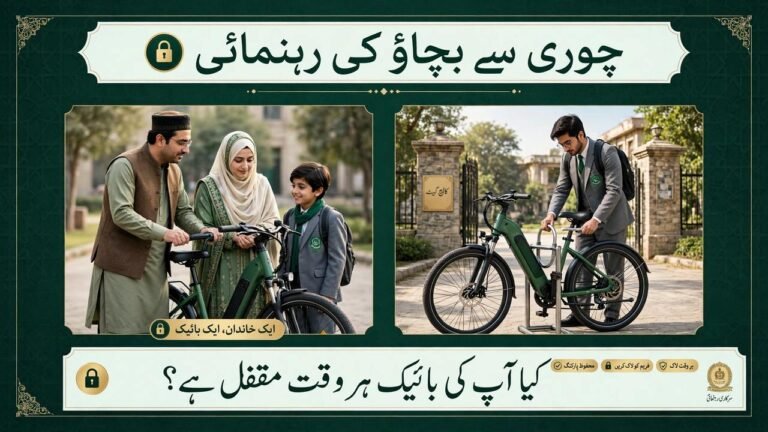
The scheme bike also comes with a free helmet, a safety rod, and two days of riding training. Girls also get free driving training. These features show that the scheme is designed around safe city riding. The safety rod protects the rider in slow-speed city traffic. The training teaches road sense for urban roads. None of this prepares a rider for motorway conditions, and that is another reason the E-Bike Motorway Rules Pakistan keep these bikes off motorways.
There is also a practical point about battery range. A motorway journey between cities is long, and there are no charging points for e-bikes on motorways. A student could run out of charge in the middle of nowhere. On city roads and national highways, help, shops, and charging options are always nearby.
What Students Should Use Instead
The best alternative to a motorway is the N-5, the GT Road, which connects most major cities of Punjab and runs close to the motorway route. Motorcycles are allowed on the N-5 and on other national highways. The journey takes longer, but it is legal and much safer for a two-wheeler. Students travelling between Lahore, Gujranwala, Gujrat, Jhelum, and Rawalpindi can use the GT Road for the whole trip.
National highways have a different character from motorways. Traffic moves slower, there are towns and service areas along the way, and a rider can stop easily if the bike needs attention. Fuel stations, workshops, and food stops are never far away. For a student on an e-bike, this kind of road is far more practical than a motorway.
Before a long trip on a national highway, students should plan carefully. A few simple steps make the journey safe and smooth:
- Charge fully: start the trip with a fully charged battery and know where you can charge on the way.
- Wear the helmet: always wear the free helmet provided with the scheme bike, even on short trips.
- Keep documents ready: carry your learner permit or driving licence, because it is required for scheme riders.
- Check the bike: check the tyres, brakes, lights, and battery before leaving home.
- Travel in daylight: avoid night travel on highways, especially on unfamiliar roads.
- Carry the helpline number: save the scheme helpline 042-111-333-267 and the NHMP helpline 130 in your phone.
For longer intercity trips, students may also consider public transport. Buses and vans use the motorway legally and reach the destination faster.
What Happens If You Try to Enter a Motorway
Motorway entry points have barriers, cameras, and NHMP staff. A motorcycle is stopped at the toll plaza and turned back. In most cases, the rider is not allowed to enter at all. If a rider somehow enters and is caught on the motorway, the NHMP can issue a challan. The exact fine amount is not fixed in public notices, so students should check the official notice or ask the NHMP helpline 130 for the current fine details before assuming any amount.
Being turned back is not the only problem. A student who reaches a motorway entry point on an e-bike has already wasted time and battery. The rider must then find the national highway route from that point, which may be confusing. Planning the route on the GT Road from the start avoids this trouble completely.
Students should also remember that breaking a traffic rule can affect their record. The scheme requires a learner permit or driving licence, and repeated traffic violations can create problems for any rider. Following the E-Bike Motorway Rules Pakistan is not just about avoiding a fine. It is about building a habit of lawful and safe riding.
Scheme Facts Every Student Should Know
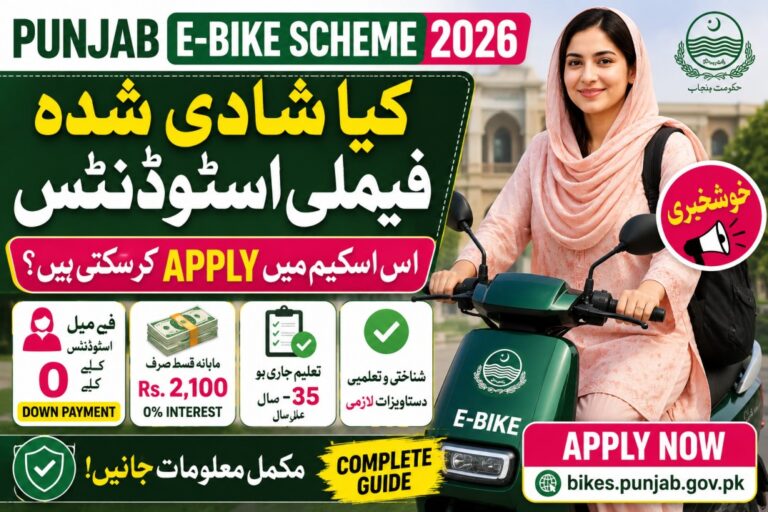
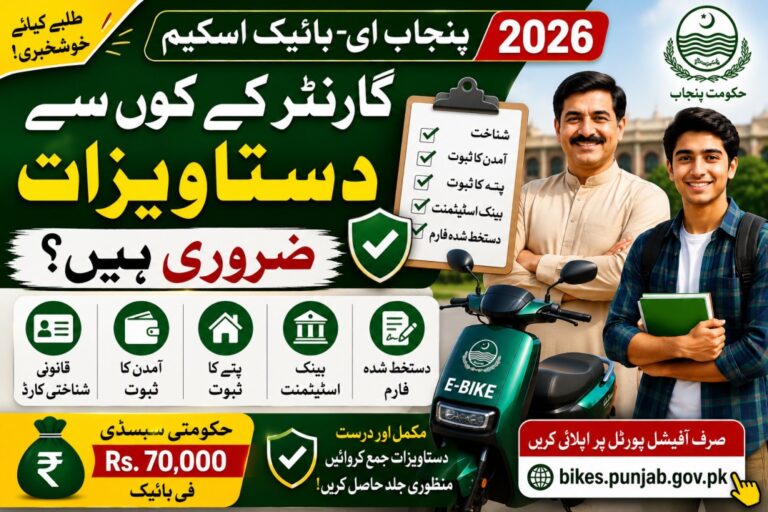
Phase 2 of the Punjab e-bike scheme received 100,000 bikes for students. Applications opened on 5 September 2026 and closed on 4 October 2026, with no extension. By 1 October 2026, registrations had reached 1,149,058, which shows how strong the demand was. The total price of a bike is Rs 199,000. The government gives a subsidy of Rs 90,000, so the student pays Rs 109,000 over 36 months at Rs 3,028 per month, with 0% markup and no down payment. The government also covers insurance, markup, registration, and token tax.
Selection is done through computerised e-balloting by PITB, and the Bank of Punjab carries out verification after selection. Students should note clearly that balloting has not happened yet. No official winner list exists. Anyone claiming to have a winner list or offering to confirm a selection for money is running a scam. The only official portal is bikes.punjab.gov.pk, and students should trust no other website for scheme information.
Distribution begins in December 2026. Chief Minister Maryam Nawaz announced this on 10 November 2026 at the Jhelum ceremony, because the bikes are still being manufactured. No exact December date and no district-wise schedule have been announced. Students should wait for the official announcement instead of believing rumours on social media.
The scheme has clear conditions. Only one bike is allowed per family. The bike cannot be sold during the loan period. The student must be a regular student of an HEC-recognised institution with a Punjab domicile, and must hold a learner permit or driving licence. For help, students can call the helpline 042-111-333-267 or email support@bikes.punjab.gov.pk.
Riding Safely on Highways and City Roads
Safe riding starts with the basics. The helmet is the most important safety item a rider owns. The scheme provides a free helmet with every bike, and students should wear it on every trip, no matter how short. A head injury can happen at low speed, and a helmet is the only protection a rider has.
The safety rod fitted on the scheme bike is another useful feature. It helps protect the rider in case of a fall and adds stability to the bike. Students should never remove it. The two-day riding training provided with the scheme teaches balance, braking, and road sense. Students should take this training seriously, even if they have ridden a petrol bike before, because an electric bike feels different.
Speed is a key part of safe riding. The scheme bike tops out at 50 to 55 km/h, which is right for city roads. Students should resist the urge to push the bike to its limit on open roads. On national highways, a steady and moderate speed is safer than the maximum speed. Keeping a safe distance from larger vehicles is also vital, because trucks and buses create wind that can push a light bike sideways. For a full guide to speed rules and challans, read our article on e-bike speed limits and traffic challans in Punjab.
Our Punjab e-bike safety guide explains the helmet, the safety rod, and the road rules every rider should know before the first trip. It is worth reading before the bikes arrive in December. And if the bike ever stops on the road, our guide on what to do during a roadside breakdown explains the steps to stay safe and get help quickly.
Night riding needs extra care. The bike’s lights should always work, and riders should wear light-coloured or reflective clothing so other drivers can see them. On highways, students should avoid the fast lane and stay in the left lane where slower traffic moves.
Frequently Asked Questions
Can scheme e-bikes use motorways in Pakistan?
No. Motorcycles are banned on all motorways in Pakistan, and this ban covers electric bikes, including scheme e-bikes. The E-Bike Motorway Rules Pakistan make no exception for students or for electric vehicles.
Which law bans motorcycles from motorways?
Section 45 of the National Highway Safety Ordinance 2000 bans motorcycles from motorways. The Supreme Court restored this ban in November 2022 after overturning an Islamabad High Court order.
Why can a scheme e-bike not use a motorway?
The scheme bike has a top speed of 50 to 55 km/h, while motorway traffic moves at up to 120 km/h. This speed gap makes the bike unsafe on a motorway. The bike is designed for city and town travel, not high-speed long-distance roads.
What is the NHMP helpline number?
The National Highways and Motorway Police helpline is 130. Students can call it for guidance about motorway rules before starting a journey.
Which road should students use instead of the motorway?
Students should use the N-5, known as the GT Road, and other national highways. These roads allow motorcycles and connect most major cities in Punjab. Buses and vans are another good option for long intercity trips.
Has the e-bike balloting happened yet?
No. Balloting has not happened, and no official winner list exists. Selection will be done through computerised e-balloting by PITB, followed by verification by the Bank of Punjab. Distribution begins in December 2026.
What is the monthly installment for a scheme e-bike?
The student pays Rs 109,000 over 36 months at Rs 3,028 per month, with 0% markup and no down payment. The total price is Rs 199,000, and the government gives a subsidy of Rs 90,000.
Where can students get official information about the scheme?
The only official portal is bikes.punjab.gov.pk. The helpline is 042-111-333-267 and the support email is support@bikes.punjab.gov.pk. Students should not trust any other website or person claiming to share winner lists.
Conclusion
The E-Bike Motorway Rules Pakistan are simple and final. Motorcycles, including scheme e-bikes, cannot use motorways. The ban comes from Section 45 of the National Highway Safety Ordinance 2000 and was confirmed by the Supreme Court in November 2022. The scheme bike, with its top speed of 50 to 55 km/h, is built for city roads, not for motorways where traffic moves at 120 km/h. Students who understand this rule before their bikes arrive in December 2026 will avoid wasted trips, turn-backs at toll plazas, and possible challans.
The GT Road and other national highways offer a safe and legal alternative for intercity travel, and public transport remains the fastest option for long journeys. Students should plan their routes on these roads, keep their documents ready, wear their helmets, and use the official portal for all scheme updates. The e-bike scheme is a great opportunity, and using the bike on the right roads will keep that opportunity safe and rewarding.